
How Chris Thomas Has Built a Government That Can Hardly Be Defeated
From Parliament to Payroll
When Lord Lisvane examined the machinery of Manx government, he identified what he regarded as one of the most significant constitutional weaknesses in the island’s political system.
There was, he argued, an unhealthy blurring of the line between those who govern and those who are supposed to hold government to account. His conclusion was fairly devastating to the then system where members enjoyed a 30% uplift in their salary for joining a department: too many members of Tynwald had become part of the executive, leaving too few capable of performing the fundamental parliamentary function of scrutiny.
Nearly a decade later, Chief Minister Chris Thomas’s departmental appointments suggest not only that Lisvane’s warning has gone unheeded, but that it may have been rendered almost irrelevant by the sheer scale of the problem.
The composition of the new administration reveals a political structure in which the overwhelming majority of elected members have now been drawn into government itself. Across Cabinet Office, Treasury, Health and Social Care, Infrastructure, Enterprise, Education, Home Affairs and Environment, Food & Agriculture, members have been distributed through the machinery of the executive to such an extent that genuinely independent parliamentary scrutiny risks becoming little more than a constitutional fiction.
The Executive’s Expanding Empire
This matters because departmental members are not politically neutral actors. They are part of the government apparatus. They attend briefings, participate in departmental decision-making, are often given delegated powers and are expected to support the work of the administration of which they form part.
Treasury members carry an even more significant responsibility, being collectively tied to the financial decisions and spending proposals that ultimately sustain every department across government.
The consequence is obvious and unavoidable. When departmental policies, spending requests and strategic programmes come before Tynwald, a substantial proportion of those voting are already institutionally committed to their success.
Ministers naturally support government policy. Departmental members are expected to support their departments. Treasury members are expected to support government finances. Once those interests are combined, the mathematical reality becomes difficult to ignore. The executive enters debates not merely defending its position but doing so with a ready-made voting bloc that extends well beyond the Council of Ministers itself.
For an administration seeking stability, that may seem attractive. For anyone concerned about parliamentary accountability, it should be deeply troubling.
A Parliament That Can No Longer Defeat Government?
The Isle of Man has long prided itself on consensus politics. Unlike Westminster, it has no formal opposition benches. The argument has always been that robust scrutiny can still exist because independent-minded members are free to question ministers, challenge policy and defeat poor decisions regardless of party allegiance.
That principle becomes considerably harder to sustain when almost every member has become part of the executive structure.
Indeed, one is forced to ask an increasingly uncomfortable question: if nearly everyone is in government, who exactly remains outside government to scrutinise it?
The problem is not simply theoretical. Government motions succeed or fail based upon votes. The more members tied into departments, and the more members collectively responsible for delivering government policy, the more difficult it becomes for Parliament to act as an effective brake on executive power.
At some point the distinction between government and legislature ceases to have practical meaning.
Lisvane’s Warning: Ignored in Plain Sight
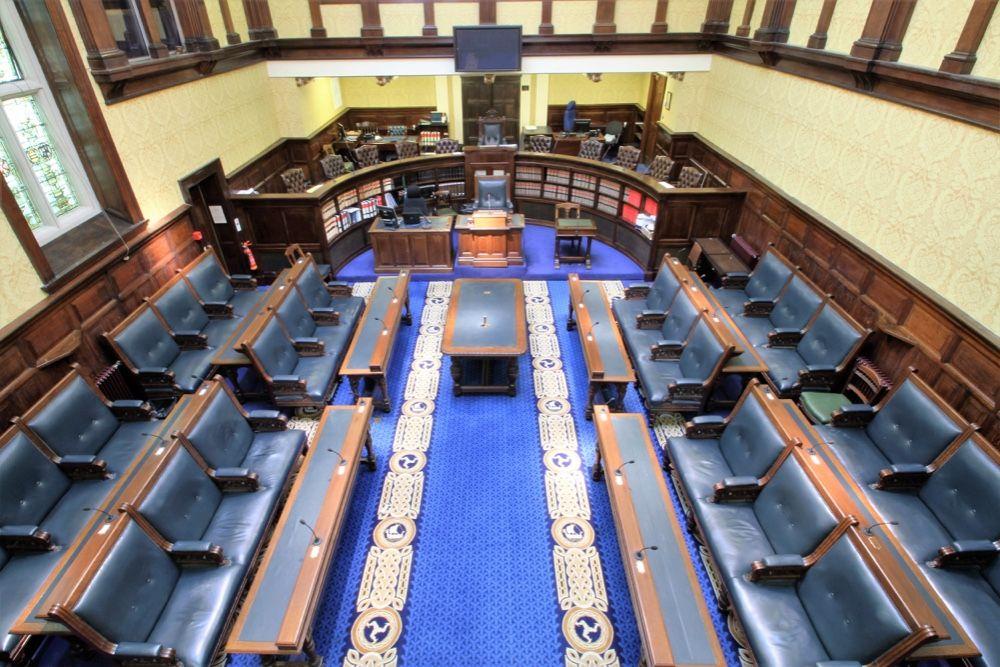
It was precisely this concern that animated Lord Lisvane’s review. His criticism was not directed at individual members but at the system itself. He described the departmental member structure as “remotely unsustainable” and warned that the perception and reality of so many politicians being absorbed into government represented a reputational liability.
Most damningly, he noted that the Isle of Man appeared to fall short of the highest standards of parliamentary governance because of the lack of a clear separation between parliament and the executive.
His remedy was straightforward. Departmental memberships should be dramatically reduced. Parliament should be strengthened. Scrutiny committees should be populated by members not tied into government. Independent oversight should be enhanced. In essence, Tynwald should become more capable of holding ministers to account, not less.
The latest appointments appear to move decisively in the opposite direction. FIVE, yes FIVE members in the DHSC plus a Minister!
Rather than reducing executive influence, Chris Thomas has broadened it. Rather than freeing members to scrutinise government, more members have become part of it. The political direction of travel could hardly be clearer.
If you’d like to read all of the Lord’s report, then here is a little side link… but do come back for the rest of my Friday evening observations….
The Change Candidates Who Became the Establishment
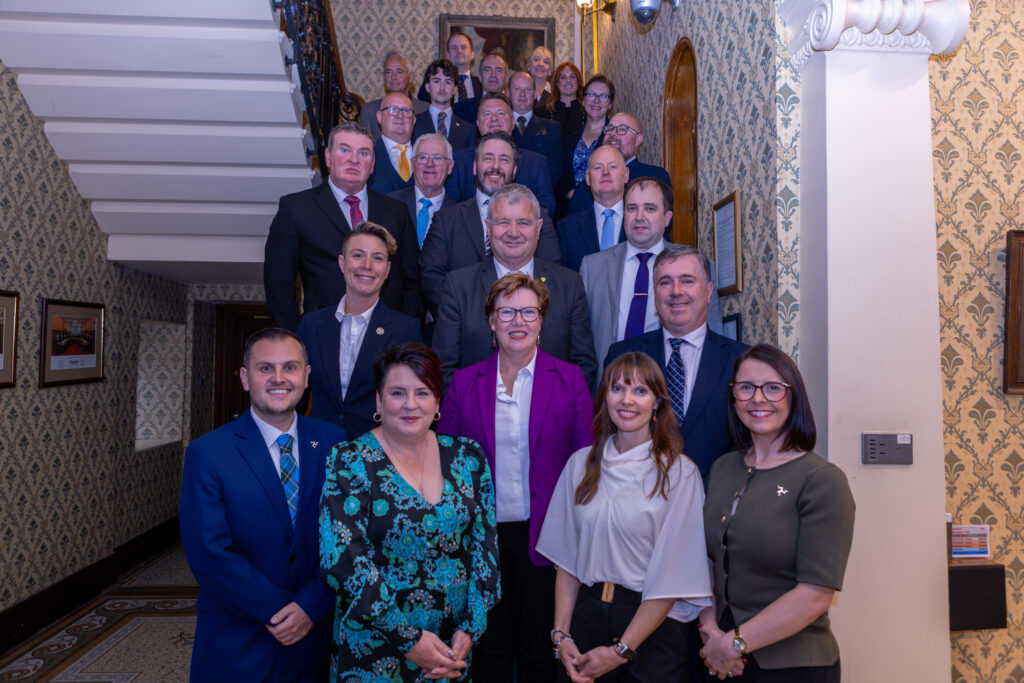
Perhaps the greatest irony lies in the composition of the membership itself. Many of those now taking their places within departments were elected on promises of change.
They presented themselves to voters as fresh voices, independent thinkers and challengers to the political status quo. Some openly criticised what they saw as a lack of accountability within government and campaigned on the need for stronger scrutiny.
Yet only weeks after arriving in office, many have accepted positions within the very structure they were elected to scrutinise.
That is not necessarily a criticism of the individuals concerned. Any newly elected member would find it difficult to decline the opportunity to influence policy from within government. The issue is what happens next.
Political independence inevitably becomes harder to exercise when one sits inside the machinery of executive government. It becomes more difficult to publicly criticise colleagues whose departments depend upon collective support.
It becomes harder to oppose policies that one has helped formulate. It becomes harder still to present oneself as an outsider challenging the establishment when one has become part of the establishment.
The result is that many of the candidates elected under the banner of change now risk becoming guardians of continuity.
Far from energising parliamentary oversight, the appointments threaten to neutralise many of the very voices voters expected would bring fresh challenge to the system. The rebel becomes the insider. The critic becomes the defender. The scrutineer becomes the scrutinised.
Government Scrutinising Government
A healthy democracy depends upon tension between those exercising power and those examining it. That tension is not a flaw in the system; it is the system.
Yet Tynwald increasingly resembles a body in which government is scrutinised by people who are themselves part of government. Departmental members sit within the executive. Treasury members are bound into collective responsibility for public expenditure. Ministers naturally defend their own policies.
The pool of genuinely independent voices becomes smaller with every appointment.
In those circumstances, scrutiny risks becoming performative rather than effective. Questions may still be asked. Debates may still be held. Reports may still be produced. But the outcome becomes increasingly predictable because despite all the grandstanding in Tynwald, the votes required to sustain government have already been assembled before the debate even begins.
And Then There Is the Legislative Council…
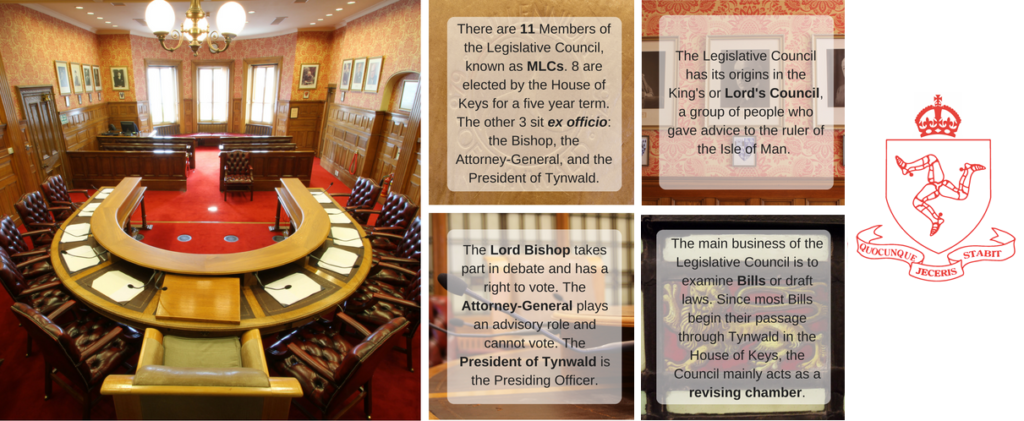
As troubling as the expansion of departmental appointments may be, it is only half the story. The role increasingly being played by members of the Legislative Council (yes I know I was once one of them!) raises an entirely separate set of constitutional questions.
Once upon a time, MLCs were expected to provide a degree of detached oversight and independent review of legislation. Increasingly, however, they appear to be becoming woven directly into the fabric of executive government itself.
More broadly, the integration of MLCs into executive structures only adds to the fundamental problem identified by Lord Lisvane. The constitutional lines become ever more blurred. The chamber that is supposed to revise and scrutinise increasingly finds itself embedded within the very machinery it is expected to examine.
If the elected branch of Tynwald is becoming absorbed into government through departmental appointments, and the Legislative Council is becoming increasingly entangled in executive decision-making, one is left wondering where independent scrutiny is actually supposed to come from.
For a political system already criticised for lacking a formal opposition, the answer is becoming increasingly difficult to identify.
The Irony of an Election Fought on Change
The 2026 General Election was, for many voters, supposed to be about doing politics differently. It was sold as a rejection of old thinking and entrenched practices. Voters were promised challenge, accountability and fresh perspectives.
What they appear to have received is a larger executive footprint than ever and it appears that the members have not even realised what was going on. The distribution of new members has been fascinating for us political anoraks. It is plain to see which potential ‘troublemakers’ have been strategically placed in which departments.
The irony is difficult to miss. Candidates elected on promises of changing government have instead been folded into it. Voices that might otherwise have stood outside the system have become part of its maintenance and defence.
It is a transformation that has occurred with remarkable speed.
The Real Winner Is Not Chris Thomas
Chris Thomas will undoubtedly argue that he is building an inclusive administration and drawing talent into government wherever he finds it. There is merit in that argument. Effective government requires capable people and departments require political support.
There is no doubt in my mind that this new House of Keys is full of highly capable people. Maybe that was what the problem for those who have gotten’ comfortable in the public sector?
But there is another interpretation that may prove harder to dismiss.
By drawing so many members into departmental roles, the new administration has not simply formed a government. It has extended the government’s influence deep into the legislature itself. It has reduced the number of genuinely independent voices available to challenge policy, question decisions and, when necessary, defeat ministers.
In doing so, it has exposed a deeper flaw in Manx politics. Tynwald already operates without a formal opposition. If departmental appointments continue to absorb ever greater numbers of members into executive responsibilities, the danger is that scrutiny ceases to be an active force altogether and becomes merely ceremonial.
Looking at the new departmental line-up, the question is no longer whether Chris Thomas has assembled a government.
The question is whether he has assembled one so large that the Parliament, Tynwald, can no longer realistically stand against it. And if that is the case, the biggest winner from these appointments is not Chris Thomas, nor any individual minister.
It is executive government itself.