

This is the story about a a sinking thousands of miles away which signals a warning the Isle of Man cannot ignore
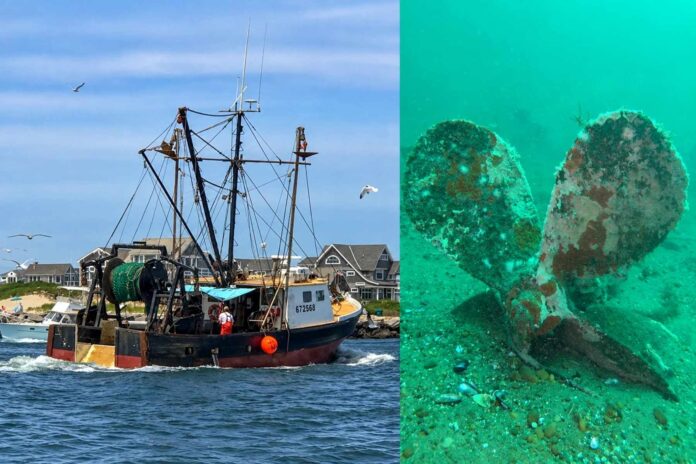
When the FV Mistress was finally found lying just 50 feet from a turbine at Rhode Island’s (Ørsted) Block Island wind farm, it confirmed what many feared: a rescue helicopter had turned back because it could not safely navigate the dense cluster of turbines in storm conditions. Two men died. The wreck remained hidden for years. And federal investigators are now examining whether turbine spacing and wind‑farm hazards contributed to the failed rescue.
For Manx objectors, this discovery is not just an American story. It is a real‑world example of what happens when offshore turbines are placed too close together and emergency services cannot reach a vessel in distress. And they say Mooir Vannin recreates the same dangerous conditions, but in harsher waters, with tighter spacing, and with far more at stake for the Isle of Man.
But crucially, the local campaign group NOT4IOM, stress this is only one of many reasons why the Manx public does not want this project forced upon them by a Government that never sought and never received a mandate, to authorise an industrial wind complex in Manx territorial waters.
A Project Pushed Without Consent
NOT4IOM argues that Mooir Vannin is being advanced through Government departments without democratic legitimacy. It was not in any election manifesto, although in 2021 many candidates championed ‘green energy’. No referendum has been held – in fact one was refused when Stuart Peters MHK tabled a motion on Net Zero. It failed and there was no public vote which endorsed it. Yet the Island is being asked to accept a development that will permanently alter its seascape, shipping routes, rescue access and marine environment.
The group says the Government is treating Mooir Vannin as inevitable, when in reality it is a political choice — one the public has never been asked to approve. They describe the process as “a project thrust upon the Island,” driven more by political momentum than by evidence, safety planning or public support.
Warnings From Frontline Operators
The strongest objections come from those who work on Manx waters every day. The Isle of Man Steam Packet Company told the MIMA Examining Body that Mooir Vannin creates a navigational choke point on the Douglas–Heysham route, a corridor used daily by vessels carrying around 1,000 passengers. They also stated that Ørsted “has not demonstrated” search‑and‑rescue and emergency planning.
Stena Line’s evidence was equally stark. They said Ørsted’s team had shown very little regard to the genuine concerns of Stena throughout the examination. These are not activists. These are the operators responsible for the Island’s lifeline routes and for UK-Northern Ireland main ferry links, warning that the project’s current design does not meet the safety standards required for vessels operating in harsh Irish Sea conditions.
NOT4IOM argues that when both major operators raise red flags, the Government’s duty is clear: stop, listen, and reassess.
The Spacing Flaw of Mooir Vannin
The FV Mistress tragedy matters because it illustrates a simple truth: turbine spacing can determine whether a rescue helicopter reaches a vessel or turns back. The United States Coast Guard now recommends one‑nautical‑mile search‑and‑rescue corridors between offshore turbines. Mooir Vannin proposes just 1,000 metres — barely half a nautical mile.
Objectors say this is not a technical detail. It is a fundamental design flaw. In Manx waters, where storms are frequent, visibility collapses quickly and shipping lanes are narrow, a helicopter must have clear access. If it cannot safely enter the array, there is no alternative route.
The FV Mistress shows what happens when turbines are too close together. NOT4IOM says Mooir Vannin recreates the same conditions — but across dozens of turbines, in harsher waters, with no backup rescue corridor.
Solway Harvester
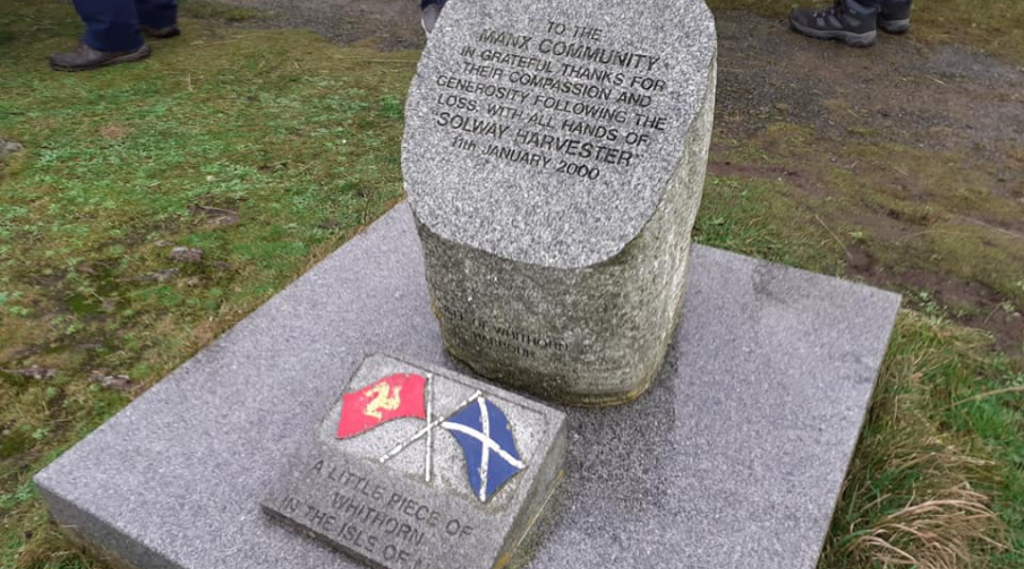
The Isle of Man does not view maritime danger in the abstract. The sinking of the Solway Harvester in January 2000 remains one of the most painful chapters in the Island’s modern seafaring history. Seven young fishermen from Kirkcudbright died when their scallop dredger went down in brutal weather east of the Isle of Man. The Island’s emergency services, harbours and courts carried the weight of that disaster for years. Although the Manx authorities did what many jurisdictions would not do, the government of the day made a pledge to recover the bodies of the men and return them to their families. It was a major operation and one that cemented a bond between the Isle of Man and the communities in Isle of Whithorn and Kirkcudbright.
The Harvester tragedy left a permanent mark on the national consciousness, a reminder of how quickly conditions in Manx waters can turn lethal, and how vital clear rescue access is when lives depend on minutes. For some, this memory is precisely why the idea of building a dense offshore turbine array that could obstruct rescue operations feels not just risky, but fundamentally wrong.
Environmental, Economic and Visual Impacts — All Unresolved
Beyond safety, objectors say Mooir Vannin raises a host of unresolved issues. They warn of ecological risks to marine mammals, seabirds and benthic habitats. They highlight the economic impact on fishing fleets already under pressure. They question whether the Island will truly benefit from cheaper electricity, or whether the project primarily serves external commercial interests. And they point to the visual impact of an industrial array dominating the eastern seascape.
For NOT4IOM, these concerns form part of a wider pattern: a Government promoting the upside while downplaying the risks, and a developer offering assurances without providing evidence.
The campaign group says the most troubling aspect of Mooir Vannin is the democratic deficit. The project was never put to voters. No public mandate exists. Yet the Government continues to negotiate with Ørsted, promote the project’s benefits, and present Mooir Vannin as a strategic necessity.
NOT4IOM argues that the Island is being asked to accept a project that will permanently alter Manx waters without ever being asked whether it wants it. They say this is not how major national infrastructure should be decided, especially one with profound safety, environmental and economic implications.
The Decision Ahead
The FV Mistress is only one example. The warnings from Steam Packet and Stena Line are another. The turbine spacing is another. The environmental risks are another. The lack of public mandate is another. Together, objectors say, they form a picture of a project being pushed forward without the scrutiny, consent or safety planning the Island deserves.
NOT4IOM’s message is clear: Mooir Vannin must be paused, redesigned, or preferably rejected. The Government must listen to the public, confront the risks, and put safety first. And above all, it must stop treating the project as inevitable.
Keys Election Sent A Clear Signal
For NOT4IOM, the results of the House of Keys election shows just how badly the past Government has misread the public mood. The combination of who was elected in and who was thrown out, made that unmistakably clear. Many of the most vocal supporters of Net Zero and schemes like Mooir Vannin lost their seats or saw their votes collapse, while candidates who publicly opposed the scheme were elected to the Keys with strong mandates from their constituencies. Objectors say this was the electorate’s verdict: the Island does not want Mooir Vannin, does not trust the assurances surrounding it, and will not accept a project of this scale being forced through by a Government that never sought permission to pursue it.
In their view, the people have already spoken and they say the Government must stop pretending otherwise.