



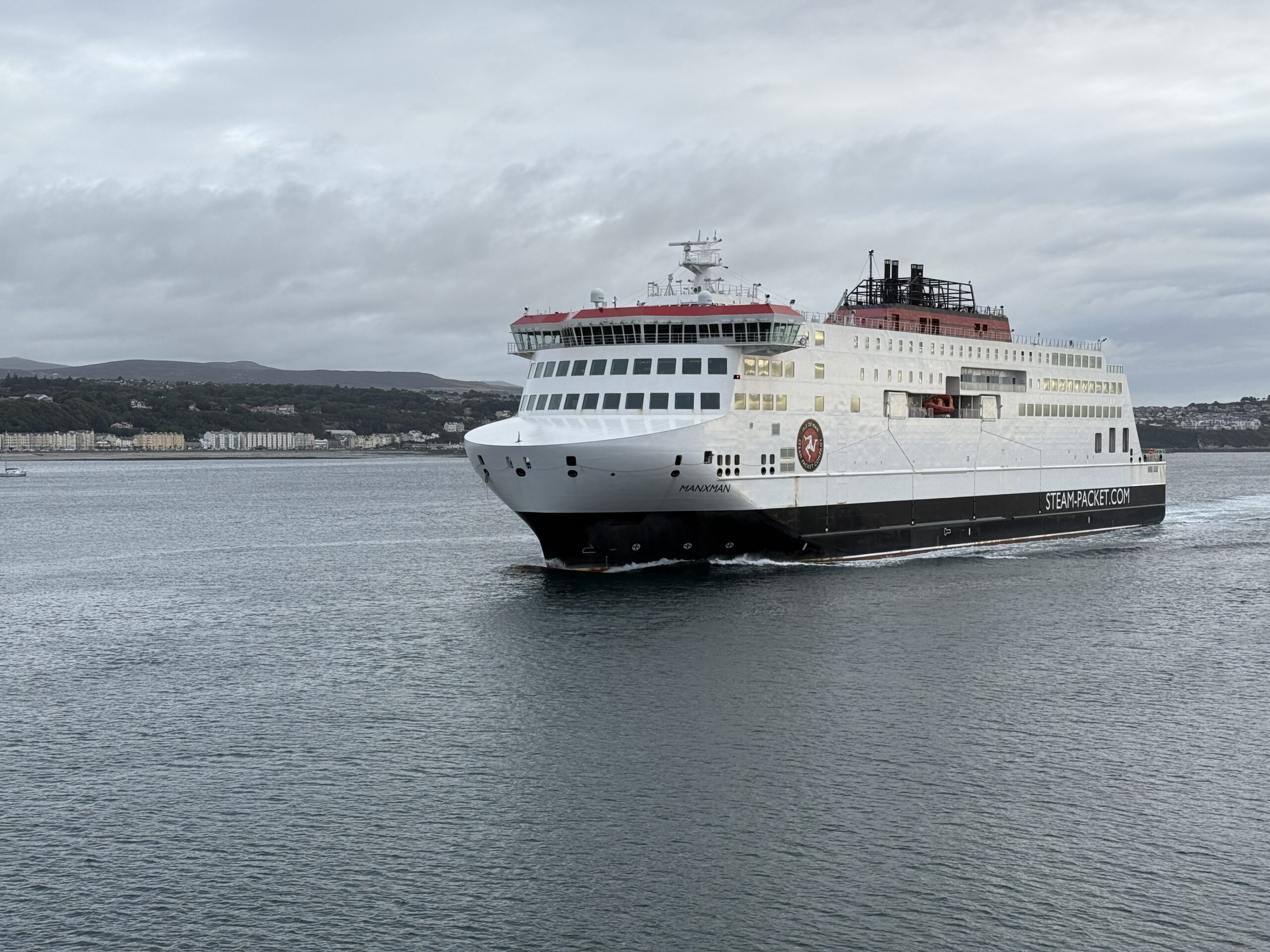
An independent report into the grounding of the Steam Packet vessel Manxman has been published.
The Manxman ran aground on a mud bank in Douglas Harbour on March 1, 2025.
The investigation into Manxman grounding identified several causes, and noted the direct cause was insufficient depth.
However, the lack of guidance documentation and an inadequate management system from with the DoI Harbours Division were significant underlying and root causes that contributed to the grounding of Manxman.
Lack of Communication From DoI
The report explains the underlying causes, root causes as well as the lack of communication from within the DoI that could have prevented the grounding:
The findings of the report for Department of Infrastructure to implement.
Underlying Causes:
• Low spring tides and high atmospheric pressure.
• Tidal gauges were unreadable, and no live data was available
• Lack of maintenance and no process or procedure for dredging.
• No communication procedures for stakeholders to receive updated charts.
• No survey plan.
Root Causes:
• Lack of effective safety management system within the Division.
• Poor communication and management oversight.
• No formal checks to ensure work is conducted as per the Safety Management System (SMS).
• Poor safety culture and communication within the Harbours Division.
Navigational and Clearance Dredging
• No regular process for maintenance dredging or capital dredging.
• Dredging operations are reactive, following reports from vessels.
• The last capital dredging was conducted over 20 years ago.
• Budget constraints in regular maintenance and procurement of full surveys.
Dredging Operations
• The work boat Tarroo Ushtey is used for dredging but has mechanical issues.
• No dredging plan or schedule exists, and training cannot be ascertained if conducted or what the requirements are.
Findings
The investigation revealed that low spring tides and high pressure lowered the water level in the harbour, causing the MV Manxman to ground due to insufficient depth.
It states that “If up-to-date charts had been provided, the vessel may have avoided the harbour.
The report adds: “The IOMSPC referred, in their immediate notice after the incident on 2 March, to the “June 2024 chart”, which was the most up-to-date full survey of the outer harbour and within the MOC at the time of the incident.
“However, their investigation states they were using the July 2023 chart. There is no evidence to confirm or deny that they received this chart prior to the incident, as no electronic records can be found.
“It is possible that if it was referred to, there was knowledge of it, but this cannot be proven. Had they been using the June 2024 chart, it would have highlighted that there was not sufficient under keel clearance in the manoeuvring area.”
The report also makes 12 recommendations to IOM Harbours.
The Author of the report was S Langley Health and Safety Advisor. It was Reviewed, Authorised and Approved by D Gooberman Director of Harbours.
The full report can be found here.

8 Comments