

Most eyes have turned already towards who the new House of Keys will elect as Chief Minister.
But tomorrow (September 29) will see an appointment that is almost as important. MHKs will elect a new Speaker.
As high profile? No.
As visible? No.
As important? Nearly.
Let me explain why.
More Than a Nice Wig
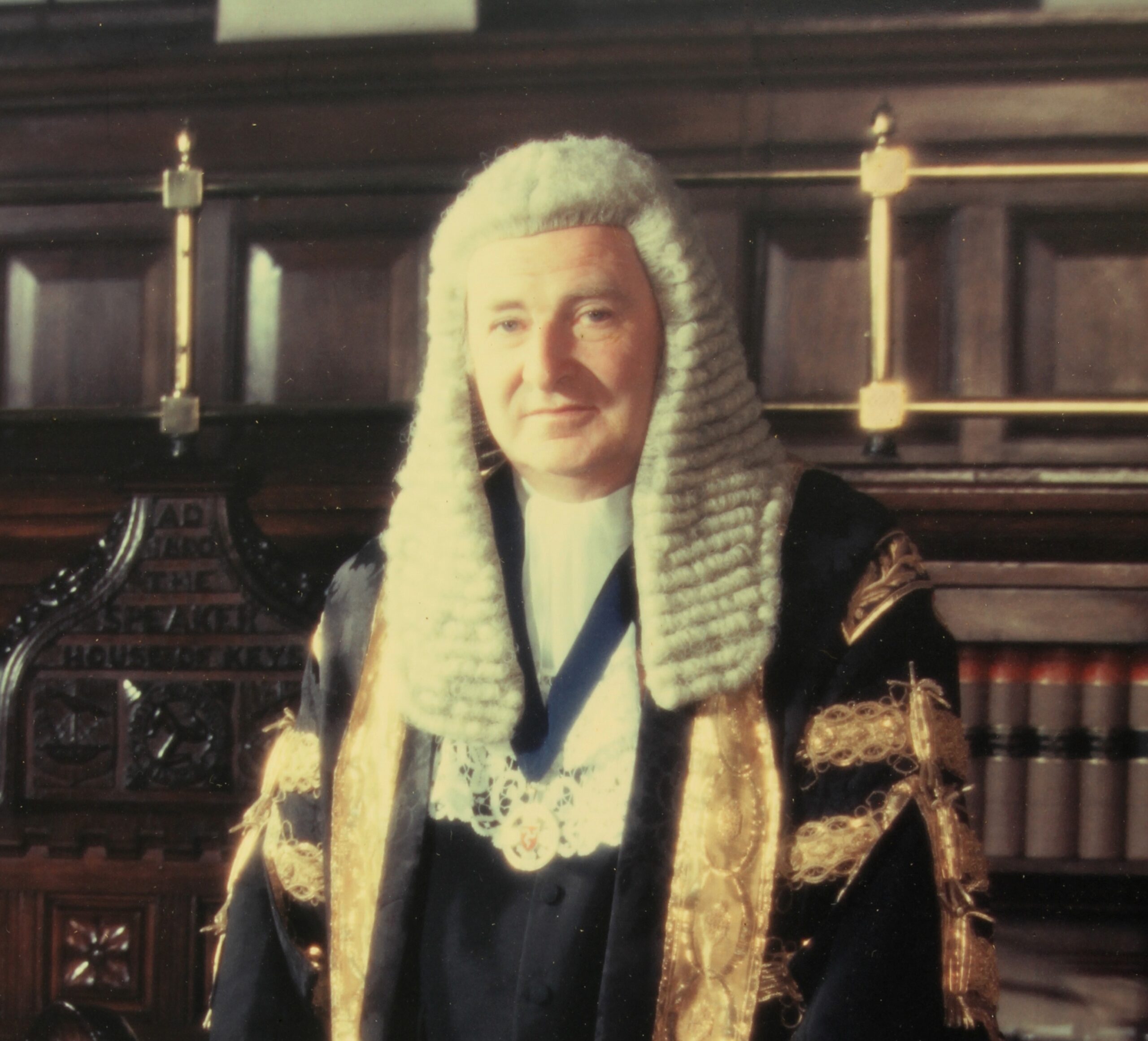
Being elected as Speaker of the House of Keys means so much more than being given a nice wig to wear.
It means being the guardian of democratic process and ensuring the MHKs do their job properly. And fairly.
Part of the job of an MHK is to hold government to account. And to scrutinise – everything.
Sadly, those two components of the job were not among the strongest suits of the past two parliaments.
This is, in part, due to the fact that the crumbling walls of scrutiny have not been fortified by presiding officers.
You will not hear the government nor the civil service complaining about that. But ask yourselves why.
The Speaker should be ensuring MHKs perform these functions. They should ensure debates take place in public and should be kicking up a stink at MHKs when they nod through, with barely a murmur, something discussed previously behind closed doors.
Democratic Duty
There is an opportunity now, with 15 new MHKs, for the Speaker to re-instill that sense of democratic duty. The need for proper scrutiny.
That applies to law-making. We have had 10 years of feast or famine in terms of legislating.
You could wait weeks for the House of Keys to have a draft bill to consider and then MHKs would think nothing of taking three reading stages at once.
There are several stages of scrutiny of draft laws for a reason. It is to reduce the risk of politicians ****ing things up.
Now, have we had any recent high profile examples of self-congratulatory Tynwald members thinking they have got a major law through, only to be told by the UK Justice Department that there were enough holes in the draft law to guarantee no chance of Royal Assent?
Amending legislation on the floor of the House of Keys and the Legislative Council can improve it, but it is also fraught with danger.
If there is no chance to scrutinise properly a change before the next reading, there is no chance to address mistakes and unforeseen consequences.
When a government tries to convince backbenchers it’s fine and dandy to take more than one reading stage of a bill on the same day, because, you know, it’s REALLY IMPORTANT, perhaps the Speaker should remind members that if a piece of law is REALLY IMPORTANT, maybe it deserves more scrutiny than you would give to a drive through McDonald’s order.
This is before we even mention the concept of public accountability and the chance for the great unwashed to react to a sudden change to a proposed law before it has been rubber-stamped and sent for Royal Assent.
Governments and civil servants are often in favour of this kind of ultra-processed law making. Again, ask yourselves why.
Benchmark
The benchmark for Speakers of the House of Keys in modern history has to be Sir Charles Kerruish.
Sir Charles was a fierce defender of the democratic process and was not averse to the occasional stern reminder to MHKs that it was their job to ensure it was followed.
This should not be a great surprise, given he also spearheaded moves to greater self-determination, which of course ended up with him being in possession of an even nicer wig when he was appointed the first President of Tynwald!
As for fears that a Speaker will not be able to represent their constituency as well, that is nonsense.
Yes, they have to be impartial on the floor in the Keys. Although there have been some fairly liberal interpretations of impartiality in more recent times.
But they still have the ability to act as a constituency MHK during Tynwald sittings. Lest we forget, Tynwald is supposed to be the primary policy making chamber and the one to which government is answerable.
This may come as a shock to MHKs from the past decade, but you can do just as much good, if not more, for your constituents, by trying to sort things out without the assistance of social media or a snappy quote on the live stream
Give it a try, you may get a pleasant surprise.
Solutions matter more than soundbites.
Best Bet
So, with all that said, who would be the best bet?
In my view it needs to be someone with a decent amount of experience, an understanding of proper process and the ability to ensure scrutiny always takes place.
From the experienced gang of nine, the name that stood out for me on that basis was Jane Poole-Wilson. I have yet to be convinced on that one.
I have heard that, among civil servants, she is the preferred choice for Chief Minister. Which brings us back to the refrain of asking yourself why.
The Speaker role is different.
They need to be all things, from the stern rule enforcer, to the guardian of democracy, to the guiding light for MHKs.
Whoever MHKs choose, it is important the incumbent is all of the above.