



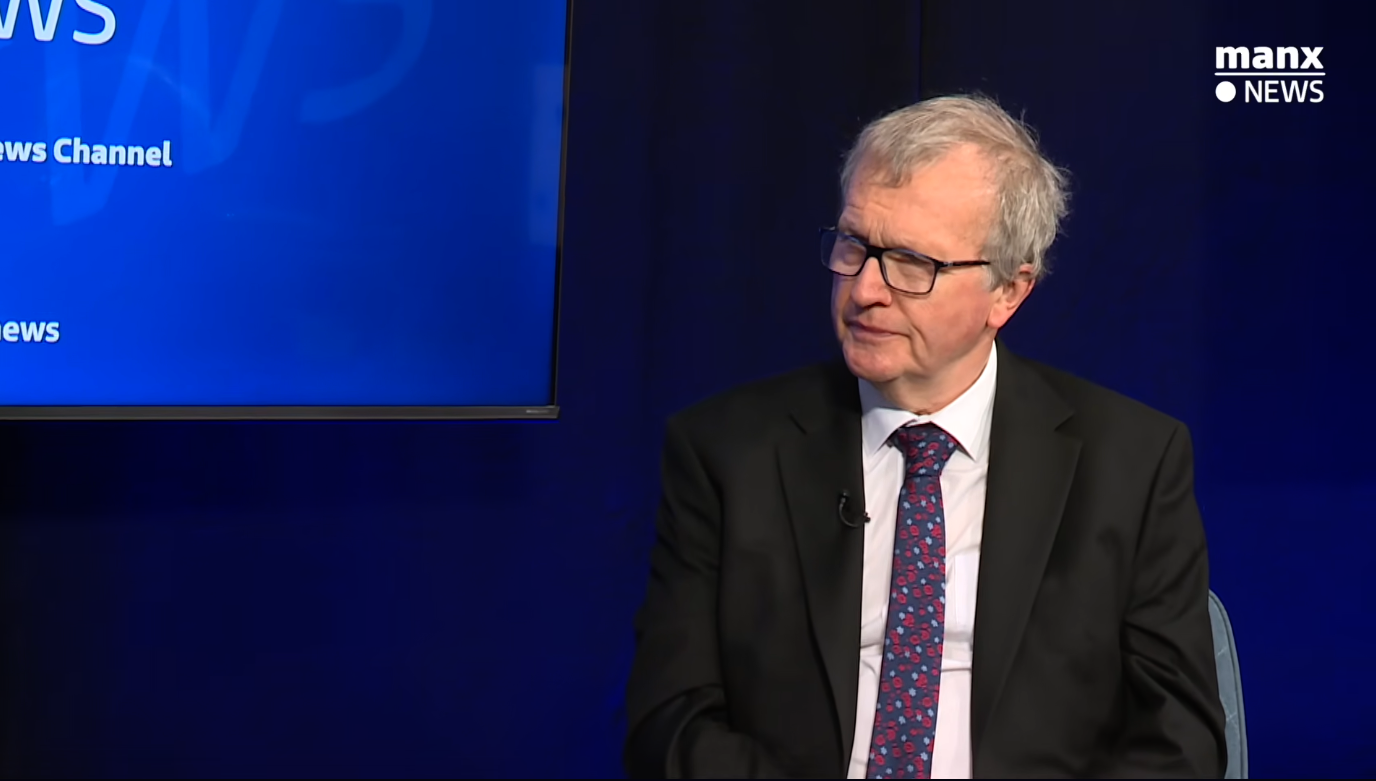
Paul Craine MLC spoke to Ivo Morrey of Manx.News about how to better understand and tackle cycles of poverty.
The interview follows the Tynwald Select Committee on Poverty’s report, which focused on child poverty and education and health solutions.
Education Department member Craine, a former teacher, reflected on the report’s 26 recommendations and 9 government amendments, and talked about what he would like to see from the next administration.
The Issue at Hand
Craine began by painting a picture of the scale of child poverty and how it could affect a child in school.
One indicator of a child living in poverty is free school meal (FSM) status. The number of children in the island on FSM sits around 20-25% depending on the area.
He said the FSM category was itself very broad and pointed to a variety of ways schoolchildren living in poverty could fall behind:
“In some cases it’s inadequate housing at home, it’s having no quiet space where you can sit and do some homework, it’s about household anxiety.”
Craine continued: “it’s maybe damp housing or health issues, either the child’s health issues or the parents health issues.
“There’s a whole series of things here: shortage of books in the house, shortage of resources, shortage of time, shortage of parental engagement with the child.”
Craine added that poverty did not have to be a barrier to education: “There are some parents in low-income households where they value education highly.
“They have their kids enrolled in libraries, they read regularly and there’s no barrier at all caused by the poverty and the parents have mitigated against the conditions themselves.”
Poor Attendance
Craine’s speech at the debate over the report highlighted poor attendance as being a key implication of these difficulties at home.
Three quarters of schools in England and Wales cite attendance as the key barrier to pupils from low-income households making progress.
“If the student’s attendance is below 90%, students will on average lose three-quarters of a grade per subject.
“You don’t get quarter grades so it’s a full grade [lost].”
Perpetuating Cycles of Poverty
History shows that education is the best way to end poverty cycles. If living in a low-income household holds a child behind in school this can cancel these benefits out:
“If a student drops one grade in one GCSE compared with other students that is estimated to cost around £19,000 over the lifetime of the student.
“A student who’s got five A’s to C’s in the old system – nine to four in the new system used in England – for grades at GCSE they are likely to earn £80,000 more over a lifetime than those who haven’t.”
Craine also spoke to the importance of education outside of getting a job: “Education is about far more than just examination results; it’s also about your confidence and your ability to communicate, your skills and a range of things.”
The Poverty Report
The report itself had called for the Education Department to introduce breakfast clubs to “ensure consistent access to affordable early morning meal provision across all schools” and report back to Tynwald within a year.
But a government amendment watered that down to say the department should review the cost and feasibility and give a progress report “noting that any cost or resource implications required to implement this would be subject to Treasury concurrence”.
The report’s 26 recommendations sought to “narrow the attainment gap, strengthen early intervention, join up support for children and families and ensure that opportunities to learn remain available beyond compulsory education”. But a number of the recommendations saw government amendments approved by Tynwald.
Craine said: “It was a good report – gosh it was thorough.”
Craine reaffirmed the support he gave in Tynwald to the nine government amendments, noting that “some of those are just amending the dates to make them more realistic so some were not substantial amendments.”
Craine praised the research that went into the report but argued that “free school meals are just a sort of snapshot of the picture”.
On what government should do in the future, the MLC pointed to a more nuanced system used in the UK which takes into account how long a child has been living in a household in poverty to paint a more accurate picture.
When asked about how the next administration should confront cycles of poverty, Craine argued that “many of the answers lie within the recommendations that went through”.
Craine also called for the next government to continue working on existing initiatives such as improving the software available in schools to provide greater access to aggregate data.
The Election
When asked about the election Craine reframed the discussion towards tackling poverty more broadly.
He argued that government need to be thinking about how it can “remove the poverty, not [how we] remove the problems caused by the poverty.”
The MLC cited the Island Plan: “When the Island Plan was being produced the work that came from a local accountancy firm on that talked about the inequalities of wealth in the Isle of Man and said how that needed to be addressed.”
For Craine, the issue centres on how government’s money is spent: “Spending needs to be targeted and one of the areas it needs to be targeted on is young families especially.”