
My interest in aviation and air travel was sparked by many afternoons spent at the Ronaldsway Airport viewing gallery. Grandma taking me on a bus journey to the airport where I still can smell the floor polish on the tiles and see those weird black and white TVs that often pop up in photos on Manx nostalgia posts on social media.
Fast forward to now and I am a middle-aged man who travels a lot for work and still loves the whole air travel experience, even though the post 9/11 processes mean it is no longer as pleasurable as it used to be.
A story has grabbed my attention this week and has upset me a little. So as my podcast guest had to pull out at short notice, I had a little time on my hands to look at what is going on here.
“Use Them Or Lose Them”?
The Isle of Man Chamber of Commerce this week urged residents to “support air routes” or risk losing them. But a closer look at fare data and the explosive growth seen in Jersey and Guernsey, raises a far more uncomfortable question:
Why are Manx passengers being told to “support” routes that cost three times more than equivalent fares elsewhere?
Published (one way) fares this week for domestic flights to the UK’s biggest hub, London Heathrow expose the scale of the disparity:
- Jersey – £53
- Guernsey – £51
- Aberdeen – £54
- Belfast – £54
- Edinburgh – £53
- Newcastle – £48
- Isle of Man – £143 !!
The Isle of Man is not just expensive. It is the single most expensive domestic destination to/from London Heathrow. And the Channel Islands show exactly what happens when an island secures a proper aviation partnership instead of relying on fragmented operators and codeshares.
Guernsey Growth – Like “Gold Dust”
In Guernsey, the newly launched BA Heathrow service has delivered immediate, measurable results. The government there reported that 7,633 passengers used the route in May alone, with 9,675 travelling since its April launch. Crucially, 64% of Heathrow passengers were visitors,pushing the island’s overall visitor share from 45% to 60% year‑on‑year. Economic Development President Sasha Kazantseva‑Miller described the early signs as “very encouraging,” while Visit Guernsey’s Zoe Gosling called BA’s global reach “like gold dust,” placing the islands in front of tens of millions of potential travellers.
BA’s global reach “like gold dust,”
Visit Guernsey’s Zoe Gosling
Jersey’s long‑standing BA partnership has produced the same pattern: low fares, strong competition, stable schedules and sustained tourism growth. Both islands have demonstrated that when you play with the big boys, you get big‑boy results.
One World
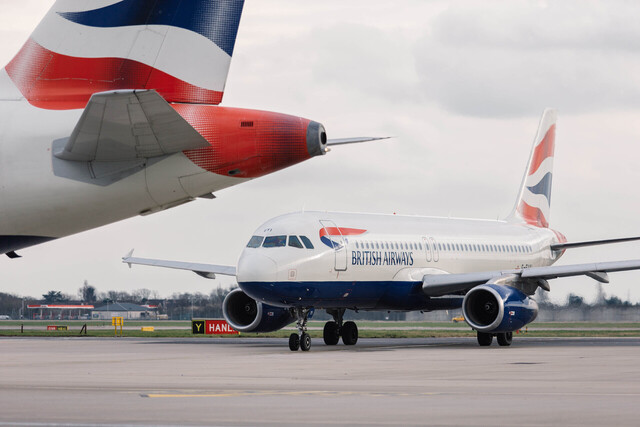
The Isle of Man, by contrast, does not have a BA service at all. It has a Loganair‑operated flight with a BA code attached to it. That means small aircraft, high per‑seat costs, no BA cabin product, no Club Europe, no lounge access, no global marketing reach and no premium revenue. Manx passengers pay premium‑level fares for a service that is not premium in any meaningful sense.
British Airways is part of the One World Alliance (Alaska Airlines/Hawaiian Airlines, American Airlines, British Airways, Cathay Pacific, Fiji Airways, Finnair, Iberia, Japan Airlines, Malaysia Airlines, Oman Air, Qantas, Qatar Airways, Royal Air Maroc, Royal Jordanian and SriLankan Airlines.). Passengers from Jersey and Guernsey can take advantage of complex routing and global connectivity easily with over 1000 destinations.
Tax
The Isle of Man’s tax policy makes matters worse. Jersey and Guernsey abolished Air Passenger Duty years ago to keep fares low and attract airlines. The Isle of Man chose to mirror the UK APD regime, adding £13+ to every departing fare before airlines even begin pricing. It is a structural penalty that the Channel Islands simply do not have and one that directly undermines the Isle of Man’s competitiveness.
Sporadic Flights To The North West
Connectivity issues compound the problem. While Jersey and Guernsey add Heathrow capacity, the Isle of Man faces days with no flights at all to some North West of England airports. Passengers regularly complain about gaps in Liverpool and Manchester schedules, reduced weekend services and operators pulling rotations with little notice. It is a basic failure of reliability, the kind that does not happen when an island has a mainline BA partnership guaranteeing daily, year‑round connectivity.
Taken together, the picture is stark. The Channel Islands have BA partnerships, low fares, stable schedules, global reach and booming visitor numbers. The Isle of Man has the highest domestic fares in Britain, APD that inflates prices further, a non‑premium service sold at premium prices, no business‑class product, no lounges, no global marketing engine and days with no flights to key regional destinations.
Yet it is Manx passengers who are being told to “support air routes.”
European & Sunshine Fares: The Isle of Man Isn’t Even in the Conversation
For anyone considering a weekend away or a short break, BA’s fare data makes the Isle of Man look like a destination priced out of reality. BA routinely sells one‑way fares to major European cities for less than the cost of flying to Ronaldsway: Amsterdam from £49, Paris from £50, Brussels from £47, Dublin from £39. But the Isle of Man sits at £143.
And the comparison becomes even more brutal when you look at sunshine destinations: Palma from £62, Faro from £68, Malaga from £69, Nice from £55. In other words, travellers can fly to Spain, Portugal or the French Riviera for less than the price of flying to the Isle of Man. For families, couples, or anyone browsing BA’s Low Price Finder, the island isn’t just unattractive, it’s a non‑starter. When Europe’s beaches are cheaper than the Isle of Man’s runway, the problem isn’t passenger behaviour; it’s policy.
Of course I have just looked at fares from London Heathrow whereas fares around the Nations and Regions airports with low cost carriers can offer even lower fares, albeit to some bizarre airports many miles out of town.
Guilt-Tripping Passengers
The Channel Islands did not boom because their residents were guilt‑tripped into flying more. They boomed because their governments secured proper commercial partnerships with British Airways, removed tax barriers and treated aviation as strategic infrastructure rather than a patchwork of short‑term operator arrangements.
In short, if the Isle of Man wants big‑boy results, it needs to start playing with the big boys.