

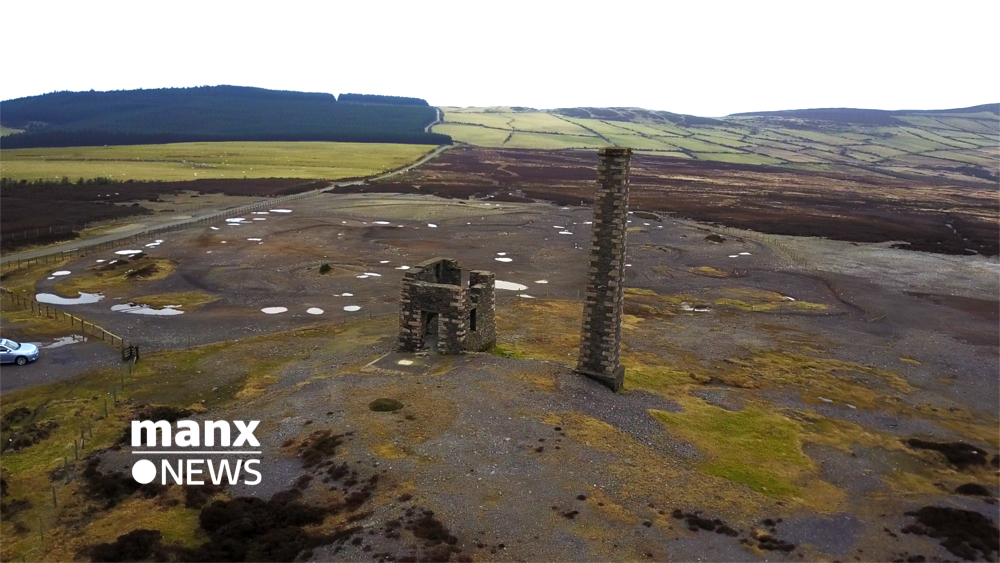
The Council of Ministers has overturned the Planning Committee’s refusal of the Cross Vein remediation scheme, approving DEFA’s appeal after a detailed public inquiry. The decision marks a major shift in the long‑running dispute over Peel’s contaminated marina sediment and the future of the disused mine site above Foxdale.
Yet within hours of issuing the approval, the Cabinet Office was forced to send a second notice after discovering that the original document had omitted the legally required reason for granting permission.
The corrected notice, dated 6 August, confirms that the Council of Ministers accepted the Planning Inspector’s recommendation to approve the development subject to fifteen conditions. In an email to all parties, Planning Appeals Administrator Lorna Milestone acknowledged the error and wrote that the Cabinet Office “apologise for any inconvenience caused by this omission,” adding that the corrected notice “replaces the original notice and for all purposes should be treated as the decision notice for this application.”
Reasons for Approval
The reason for approval, missing from the first version, states that “subject to conditions, there would be no material harm in terms of highway safety or land drainage and water resources.” It goes on to acknowledge “minor negative effects in the short term” for ecology and “a temporary, minor adverse effect in terms of noise for residents along the haul route,” but concludes that these harms are “demonstrably outweighed by the benefits of the scheme.” Those benefits include remediation of longstanding contamination at Cross Vein, improved downstream water quality, enhanced hydrological resilience and the provision of a disposal route for Peel’s heavily contaminated marina sediment.
The Council of Ministers endorsed the Inspector’s view that the environmental need for remediation is “a consideration of overriding national importance, for which there is no reasonable and acceptable alternative.”
Ownership Dispute: The Commoners’ Allotment Question That Will Not Go Away
One of the most interesting arguments raised throughout the Cross Vein process concerns the ownership of the land itself. Objectors repeatedly asserted that DEFA does not own the site and that the application was submitted on a false premise. The Inspector’s report confirms that the land forms part of the historic Patrick Commoners’ Allotment, held in trust rather than owned outright by any government department. During the inquiry, this issue was raised immediately, with residents arguing that the Planning Committee had been placed in an impossible position by being asked to determine an application from a department that did not control the land it sought to develop.

The Inspector acknowledged the substance of the objection. In her report she wrote that “concerns were raised regarding legal ownership and long‑term control of the appeal site, which forms part of historic Commoners’ Allotment land held in trust.” She accepted that this arrangement could have implications for implementation if permission were granted. However, she concluded that ownership was not a matter that could influence the planning merits of the case. Her report states that “such considerations may have implications for implementation were permission to be granted, they do not go to the planning merits of the case,” and she added that planning permission “would not override any rights that might be derived from that historic arrangement.”
This position has frustrated objectors, who argue that the ownership question is fundamental rather than peripheral. Mrs Kirrie Jenkins told the inquiry that the application rested on “a known misstatement” and warned that the Committee had been left to “mark its own homework.” Others argued that the omission of the Patrick Commoners from the notification process undermined the legitimacy of the application from the outset. The Inspector did not dispute the factual basis of these claims, but she ruled that planning law does not allow ownership disputes to be used as grounds for refusal.
Rights Remain Intact
The result is a decision that approves a major remediation scheme on land the applicant does not own. The Inspector’s report makes clear that any rights held by the Commoners remain intact and that planning permission does not confer authority to enter or develop the land. Implementation will therefore depend on DEFA resolving the ownership and access issues outside the planning system. For residents, this remains one of the most contentious aspects of the Cross Vein story. For government, it is a legal complication that now sits alongside a planning approval that is otherwise final and binding.
“Any grant of planning permission would not override any rights that might be derived from that historic arrangement.”
Jennifer Vyse DipTP, MRTPI, DipPBM, Planning Inspector
The Inspector acknowledged these concerns but concluded that the evidence did not support refusal. She found that the ecological baseline was sufficiently understood and that any short‑term harm could be mitigated through strict conditions, including new surveys for lichens and waxcaps, the appointment of an Ecological Clerk of Works and a five‑year water‑quality monitoring programme. She also noted that the site already contributes heavy metal contamination to the River Neb catchment and that the proposed capping would reduce this risk rather than exacerbate it.
Traffic
On traffic, the Inspector found no substantiated evidence of a material highway safety risk. She accepted DEFA’s commitment to avoid school start and finish times and to suspend haulage during the Manx Grand Prix period. The inquiry also examined alternatives to the Cross Vein proposal, including exporting sediment to landfill or constructing a new river wall at Peel. The Inspector concluded that none of these options were feasible or environmentally acceptable and that Cross Vein was uniquely suited to receive and reuse the treated material.
The approval comes with one of the most extensive condition sets seen in recent years (Summary below). Before any work begins, DEFA must submit a detailed design and programme of works, including the layout of the treatment plant, storage areas, wheel‑washing facilities and protective fencing. No capping material may be imported other than the treated Peel sediment. Working hours are tightly restricted and all temporary plant must be removed within twelve months of completion. The remediation phase must end by 1 March 2028.
Doleance
The Cabinet Office has reminded all parties that the Council of Ministers’ decision is final. The only remaining route of challenge is a petition of doleance to the High Court, which must be filed within three months.
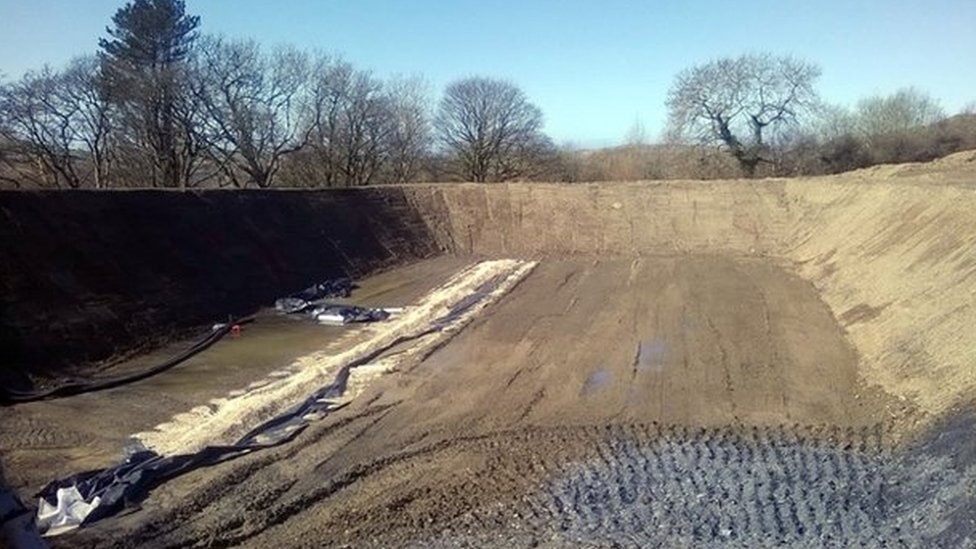
The approval is meant to resolve one of the Island’s most pressing environmental dilemmas. Peel Marina cannot be dredged again until a lawful disposal route exists for its contaminated sediment. The lagoons at Ballaterson Farm are at capacity and were only ever intended as a temporary measure. The Inspector noted that without a long‑term solution, the Island would be unable to maintain safe depths for commercial vessels, fishing fleets and harbour operations. She described the situation as a “critical problem” with no acceptable alternative.
For Foxdale residents and environmental campaigners, the decision will be a disappointment. For government, it represents the unlocking of a stalled national infrastructure issue. And for Peel, it signals that the long‑delayed remediation of Cross Vein is now set to proceed under tight supervision and with significant environmental safeguards.
Planning War Won. The Next One Could Stop It Dead
For all the weight placed on national need and environmental urgency, the Cross Vein approval does not guarantee that anything will happen on the ground. The Inspector herself noted that planning permission “would not override any rights that might be derived from that historic arrangement,” a reminder that the Patrick Commoners’ Allotment remains a legal reality, not a footnote. DEFA may now hold a permission endorsed at the highest level of government, but it still does not own the land it intends to remediate. Until that fundamental obstacle is resolved, the scheme exists only on paper. The political battle may be over, but the practical one is just beginning, and there remains every possibility that something outside the planning system could yet stop this project in its tracks.
Summary Of Condition On The Cross Vein Approval
- Start of Works — Development must begin within four years to prevent stockpiling of unused permissions.
- Detailed Design Plan — Before any work starts, DEFA must submit a full design and programme of works covering plant layout, storage, wheel‑washing, wind‑blow controls and protective fencing.
- Lichen Survey — No capping can begin until a qualified lichenologist maps rare and metalliferous species and proposes any salvage or translocation.
- Waxcap and Reptile Surveys — Surveys of both road verges must be completed and mitigation agreed before development begins.
- Transport Management Plan — Haulage must avoid school times, include a traffic marshal at Glen Rushen Road, and stop entirely during the 2027 Manx Grand Prix and Classic TT.
- Ecological Clerk of Works — A qualified ECoW must oversee sensitive works, supervise mitigation and report unforeseen ecological issues.
- Surface Water Drainage — Temporary and permanent drainage measures must be approved, including phasing, pollution prevention and monitoring.
- Water Quality Monitoring — A five‑year monitoring scheme must be implemented with trigger levels, reporting and contingency actions if water quality worsens.
- Working Hours — Work is limited to weekday daytime hours and Saturday mornings. No Sunday or bank holiday activity.
- Habitat Creation Plan — A full habitat creation and landscape management scheme must be approved, covering growing medium, planting, biosecurity and five‑year maintenance.
- Temporary Structures Control — No temporary buildings or compounds may be placed on site except those approved under the detailed design plan.
- Lighting Restrictions — Any lighting must be low‑intensity, downward‑directed and strictly necessary, with measures to prevent sky glow and wildlife disturbance.
- Capping Material Limit — Only treated Peel marina sediment may be used as capping. No other material can be imported.
- Remediation Deadline — The remediation phase must end by 1 March 2028, except for defect correction.
- Removal of Plant — All temporary plant, welfare facilities and parking must be removed within twelve months of completion.