



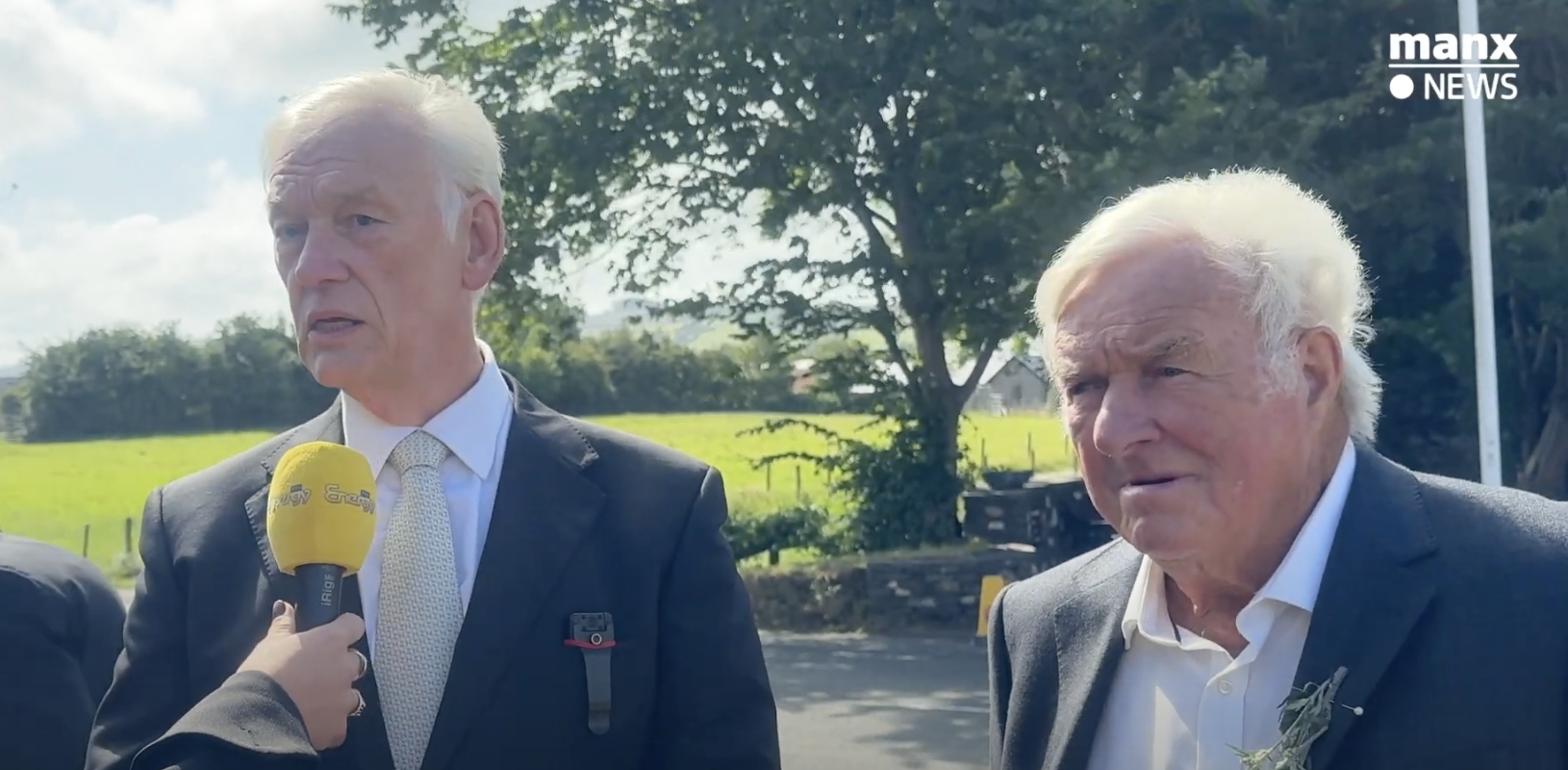
Local campaigner Alf Caine has issued an open letter to Members of Tynwald raising concerns about the financial position, transparency, and public accountability surrounding the Isle of Man Ferry Terminal in Liverpool.
Mr Caine’s open letter to the Members of Tynwald is as follows:
I write further to recent Freedom of Information disclosures, Treasury correspondence, and evidence now given publicly to the Public Accounts Committee concerning the Isle of Man Ferry Terminal in Liverpool.
It is increasingly clear that serious questions exist regarding the financial position, valuation, governance, and public accountability surrounding this project.
My enquiries into the financial position of the Liverpool Ferry Terminal began with direct correspondence to the Department of Infrastructure and Treasury Ministers on 11 February 2026, seeking straightforward information regarding operating costs, income received from the Steam Packet Company, and whether the terminal operated at a net cost or surplus to the public purse.
I initially attempted to avoid the need for formal Freedom of Information requests and the associated public expense. However, Treasury advised that the appropriate route for obtaining answers would be through the Freedom of Information process.
Since then, there have now been more than 33 separate items of correspondence involving Treasury and the Department of Infrastructure. Despite this extensive exchange, clear answers to the most basic financial questions surrounding the Liverpool Ferry Terminal still have not been provided.
The public is entitled to ask why straightforward information concerning operating costs, income received, financial performance, asset valuation, and taxpayer return continues to be delayed, fragmented, or withheld.
Despite repeated requests, Treasury and the Department of Infrastructure continue to avoid providing straightforward answers to what are, in reality, very simple public interest questions:
- How much does the terminal cost to operate?
- How much income does it generate?
- What return is the Manx taxpayer receiving on a project now widely reported to have exceeded £100 million in public expenditure?
Public expenditure on the Liverpool Ferry Terminal has been widely reported as exceeding £100 million, including statements made publicly in Tynwald and subsequent media reporting.
The Department of Infrastructure has confirmed that:
- The annual operating cost of the terminal is approximately £710,575 per annum
- The terminal is currently operating at a net cost to Government
- The Steam Packet operates under a temporary short-term licence
- The licence arrangement involves only a peppercorn licence fee
- Key financial figures continue to be withheld under claims of commercial sensitivity
At the same time, Treasury has repeatedly delayed responding to Freedom of Information requests relating to the terminal’s financial performance, accounting treatment, and value for money.
The public is now entitled to ask why.
This issue has moved far beyond a routine Freedom of Information dispute.
Evidence recently presented before the Public Accounts Committee confirmed that the Liverpool Ferry Terminal project caused significant accounting difficulties within Government. Treasury officials admitted:
- Government accounts were delayed because of valuation and accounting issues linked to the terminal
- Treasury considered publishing accounts that auditors would not certify as giving a “true and fair view”
- The project was described as “highly complex and unusual”
- Officials acknowledged limited Government experience in delivering projects of this nature
This raises fundamental public finance questions.
If taxpayer funds exceeding £100 million have now been committed to this project, what is the true economic value of the asset?
Construction cost does not automatically equal market value.
The terminal operates under significant operational restrictions, including freight limitations imposed through the planning and licence arrangements. The facility appears heavily dependent on a single Government-owned operator paying only a nominal licence fee while Government itself confirms the terminal currently operates at a net cost.
If this asset were placed on the open market today, would it realistically achieve anything close to its reported cost?
Has Treasury undertaken any impairment assessment or independent valuation reflecting actual commercial realities?
Most importantly:
where is the measurable return for the Manx taxpayer?
The public is increasingly being asked to accept claims of “commercial sensitivity” in circumstances where:
- the taxpayer funded the asset
- the taxpayer carries the operational risk
- the taxpayer owns the Steam Packet Company
- and the taxpayer ultimately bears the financial consequences
Under such circumstances, claims of commercial confidentiality begin to look less like legitimate protection and more like a barrier to public accountability.
One of the most important unanswered questions is whether revised business cases were ever presented to Treasury as project costs escalated dramatically from the original reported estimate of approximately £18.5 million to figures now stated publicly to exceed £100 million.
If revised approvals, revised value for money assessments, or revised financial projections exist, the public deserves to know:
- when concerns were identified
- who approved further expenditure
- what returns were forecast
- and whether those forecasts remain credible today
This matter is no longer simply about a ferry terminal.
It concerns standards of governance, financial oversight, transparency, and accountability across Government itself.
The Manx public deserves clear answers on:
- the total public cost of the project
- the current carrying value of the asset
- the annual operating deficit
- the level of income received from the Steam Packet
- the long-term financial sustainability of the terminal
- and whether taxpayers are receiving any meaningful return whatsoever
I therefore urge Tynwald Members to support full transparency regarding the Liverpool Ferry Terminal and to ensure proper public scrutiny of both the project’s financial position and the decisions which led us here.