


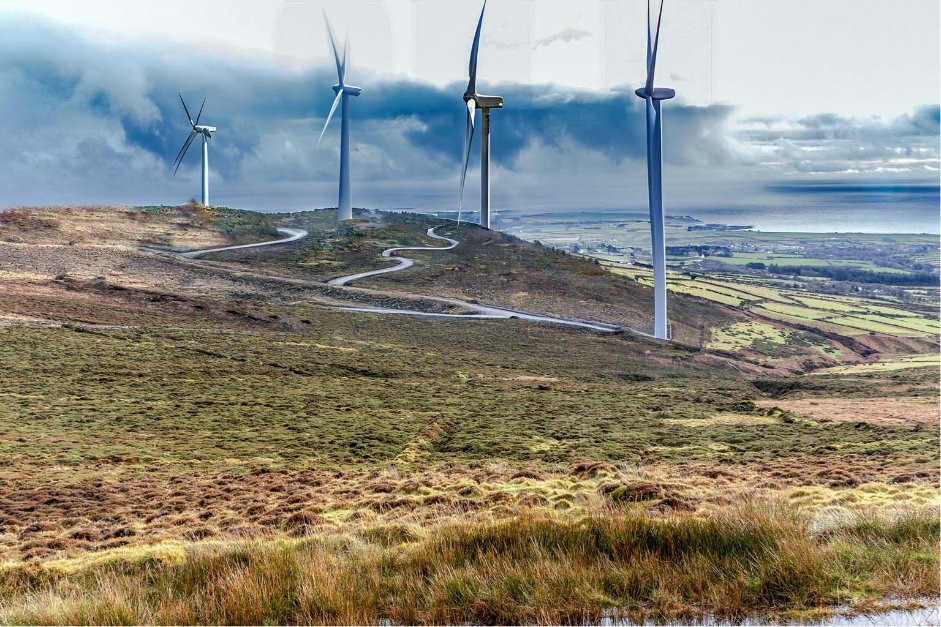
A newly published paper by Chartered Environmental Engineer Paul Burgess, has cast serious doubt on the financial and technical viability of the proposed Earystane (Cair Vie) onshore wind farm in the Isle of Man.
The £40 million project, spearheaded by the Manx Utilities Authority, is a cornerstone of the island’s strategy to achieve net-zero carbon emissions by 2030. But Burgess argues that the plan is built on flawed assumptions, unrealistic performance expectations, and a lack of transparency about long-term costs.
The Vision vs. The Reality
Manx Utilities claims the wind farm will deliver 20 MW of renewable energy with a load factor of 64%, meaning the turbines would operate near full capacity for most of the time. Burgess calls this figure “unprecedented,” noting that no large-scale wind farm globally has achieved such performance. UK averages for onshore wind hover around 27%, and even offshore farms rarely exceed 50%.
“A 64% load factor would be a world record,” Burgess writes. “It’s not just optimistic—it’s implausible.”
He suggests a more realistic load factor of 40%, which would significantly reduce the farm’s energy output and economic return.
Turbine Lifespan and Performance Decline
While Manx Utilities estimates a 30-year operational life for the turbines, Burgess cites industry data showing that wind turbine output typically declines by 3% annually due to wear and tear. This degradation means the turbines may only be economically viable for 15 years, not 30.
This shorter lifespan has major implications for the project’s cost-effectiveness and carbon payback period. Burgess warns that the Isle of Man could end up replacing turbines far sooner than expected, doubling capital costs over time.
Hidden Costs and Infrastructure Challenges
Burgess’s paper outlines several overlooked or underestimated costs that could dramatically inflate the project’s price tag:
- Gas Station Cycling: Wind energy’s intermittency forces the island’s gas-fired power station to ramp up and down inefficiently, increasing wear and fuel use. This adds approximately £7/MWh to the cost of electricity.
- Grid Inverters: To stabilize the grid during periods of high wind and low demand, £15 million worth of inverter systems will be required. These add another £2/MWh to the cost.
- Decommissioning Costs: Contrary to industry claims of £1 million for turbine removal, Burgess references Finnish research estimating costs between £6.4–£7.65 million. This adds £3–£4/MWh and raises concerns about non-recyclable turbine blades and environmental restoration.
- Carbon Payback: The carbon emissions from construction, maintenance, and decommissioning may not be offset within the turbines’ shortened lifespan, undermining the project’s environmental goals.
True Cost of Energy: A Stark Contrast
Manx Utilities estimates the levelized cost of energy (LCOE) at £35/MWh. Burgess recalculates this figure using more conservative and realistic assumptions, arriving at an LCOE of £112–£113/MWh—more than triple the original estimate.
This revised cost exceeds the price of importing electricity from the UK grid, which ranges from £60–£80/MWh. Burgess argues that the wind farm could become a financial liability rather than a sustainable asset.

Net-Zero Ideology vs. Engineering Reality
Burgess is critical of what he sees as a politically driven push for net-zero targets without sufficient engineering and economic scrutiny. He warns that the Isle of Man’s contribution to global carbon reduction is negligible and that the island risks repeating past mistakes—such as the Pulrose power station, which he claims exceeded its budget by 40%.
“We need to stop and think before proceeding,” Burgess cautions. “This is not just about green energy—it’s about responsible planning.”
What Isle of Man Residents Should Know
- Electricity Bills Could Rise: If the wind farm underperforms or overruns its budget, residents may face higher tariffs or increased taxes to cover the shortfall.
- Environmental Risks: The project could damage sensitive peatland habitats and leave behind non-recyclable waste if decommissioning is mishandled.
- Lack of Transparency: Burgess calls for clearer public communication and independent review of the project’s assumptions and financial modeling.
- No Global Precedent: The performance metrics claimed by Manx Utilities have not been achieved by any comparable wind farm worldwide.
Paul Burgess’s paper is a sobering reminder that good intentions must be matched by rigorous analysis. As the Isle of Man moves toward a greener future, residents and policymakers must weigh the costs, risks, and realities of renewable energy projects with open eyes and informed minds.
Net Zero Referendum
Adding to the growing debate, MHK Stu Peters has proposed a public referendum on the Isle of Man’s net-zero strategy, arguing that such sweeping environmental policies should not proceed without direct democratic consent.
His call aligns with concerns raised by Paul Burgess, who warns that the Earystane wind farm project exemplifies a lack of transparency and over-reliance on ideological targets.
Peters believes residents deserve a say in whether the island pursues costly green initiatives that may offer limited global impact but carry significant local consequences. The referendum proposal could become a pivotal moment in shaping the island’s energy future—placing the public at the heart of decisions that affect their wallets, landscapes, and long-term sustainability.