



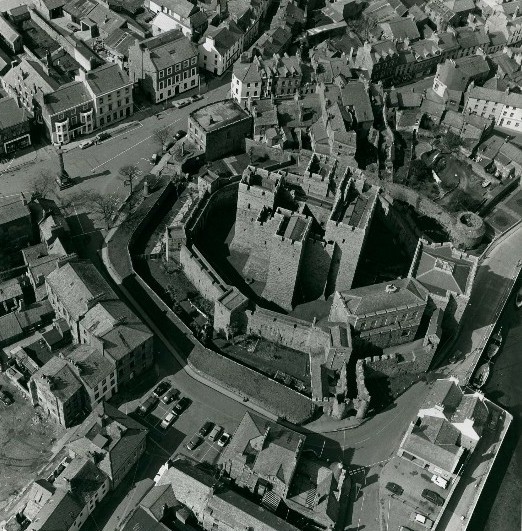
Manx National Heritage has begun a new phase of conservation work at Castle Rushen.
Specialist repairs are underway at Derby House to protect its historic fabric and preserve it.
The six-month project will focus on repairing and conserving the building, using traditional materials and specialist techniques to retain its historic character.
Work to Take Place
Works will include repointing the south elevation of Derby House and rebuilding an area of Georgian brick infill, using conservation techniques including lime mortar, appropriate to the historic fabric of the building. Scaffolding will be erected within the castle to facilitate the work.
Further works will include repairs to the parapet gutter leadwork, reinforcement of window lintels and repairs to the building’s traditional timber windows.
Inside Derby House, the staircase leading to Castle Rushen’s Registry Office will also be repaired, alongside work to restore its decorative finishes.
The project is being delivered by local contractor Grenaby Limeworks, with completion scheduled for March 2027.
Important Repairs
John-Paul Walker, Historic Buildings Architect for Manx National Heritage, said: “Castle Rushen is one of the Isle of Man’s most important historic landmarks, and caring for its buildings requires a commitment to preserving the historic materials and craftsmanship that make them so special.
“This project will address important repairs to Derby House, helping to protect its historic character and ensuring it can continue to be appreciated by future generations.”
Castle Rushen will close to visitors for the winter season on November 1, with conservation work at Derby House continuing throughout the winter months.
The six-month project will conclude ahead of the castle’s spring reopening on 23 March 2027.
The History of Derby House
Building of Derby House began in the 1580s to provide private accommodation within the castle for the Earl of Derby during his visits to the island.
During the 1640s, amid the English Civil War, it was modernised and extended to accommodate James Stanley, the 7th Earl of Derby and Lord of Man, and his family.
Following the Island’s Revestment in 1765, Derby House was repurposed to accommodate offices supporting the law court in the castle gatehouse. It also served as the island’s legal library and the Rolls Office, remaining in this role until it was handed over to the Isle of Man Government in 1929.
Until recently, the building continued to serve as a Registry Office.