




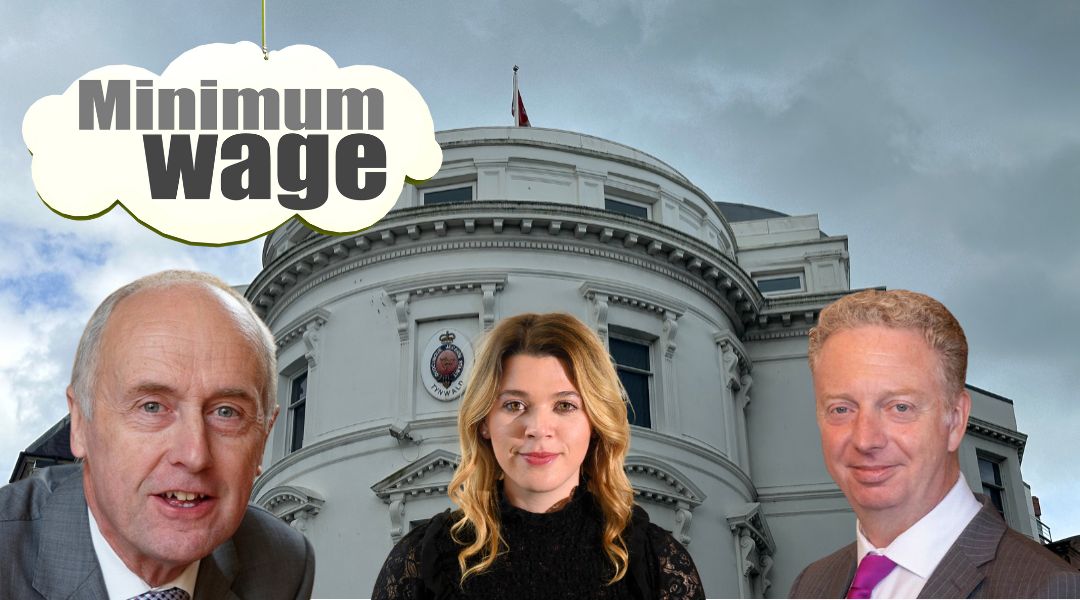
The clock is ticking until the new proposed minimum wage rate hits the Tynwald debate floor next week.
Many businesses have raised concerns that the 9.9% increase is beyond the scope of what they can afford, whilst the current government believes it can do be done.
With “grave concerns” and other options available, Manx.News spoke to Treasury Minister Dr Alex Allinson to understand why the government is looking to implement another increase.
However, Manx.News also spoke to former Treasury minister Eddie Teare who felt that the government should “scrap” the proposals as they’re a “step too far”.
A Step Too Far
In July this year, Tynwald approved a new method of calculation, tying the minimum wage to 66% of median earnings.
Once implemented, it will be a statutory requirement, meaning all employers must pay at least the new minimum wage to employees working on the island.
Many have called for an increase in personal allowance thresholds instead of an increase in minimum wage.
Mr Teare backed this and questioned as to the Isle of Man government doesn’t follow Jersey’s steps of increasing thresholds to £20,000 instead of £14,500.
Mr Teare told Manx.News that he thinks the proposals are “misjudged”.
He said: “They’re going to throw the pebble in the pond, and I don’t think that they’ve anticipated with respect, what the ripple is going to do now, the first thing is, it’s inflationary.
“The second thing is, it’s going to cause increases elsewhere, because people who are earning just above the minimum wage will be looking for the differentials to be maintained. So they’ll be looking for more pay as well.
“And the other thing is now the elephant in the room is that they’re going to be faced with a difficult position when they’re negotiating with the trade unions on pay right across the public sector, because on one hand, they’re saying a section of the community needs a pay rise of 9.9% and on the other side, they’re telling the unions that you can’t have anything like that.
“And the unions have rejected the offer they’re put in. So one is going to, in effect, laugh at the other.”
Low Pay Aren’t Left Alone
Speaking to Manx.News about the increase, Dr Allinson said: “I think it’s absolutely right that any worker who’s working hard gets the fruit of their labor, and so we I think it’s absolutely right that as wages increase across our community, those on low pay aren’t just left alone.”
“When the minimum wage was originally brought in the UK, the first minimum wage was £3.60 an hour. It’s gone up quite considerably, but it still hasn’t kept up with the overall increase in wealth and distribution of wealth on our island.”
Dr Allinson added: “I think by twinning it with median earnings, we will do that. I think it’s really important that people see their wages going up to keep track with inflation. In terms of taxation, both in terms of income tax, but also in terms of national insurance, it is very important that we have a balanced budget.”
The Treasury Minister advised those businesses that are struggling to reach out to the Department of Enterprise to discuss support available.
Increase in Thresholds
Manx.News asked Dr Allinson why the thresholds hadn’t increased, to which Dr Allinson stated they had by £250.
However, Mr Teare believes the increase was “just a fig leaf”.
He said: “It’s just to say we’ve increased the personal sector. We’ve increased it, but that’s all.”
When asked if there were other options to increase earnings, without putting jobs at risk by increasing the minimum wage, Mr Teare said: “In effect, it’s like trying to bottle fog, isn’t it?
“You’re just chasing around. So in effect, the headline rate has gone up, but they’ll be getting less hours, and they’ll be having less cash in their pocket.
“But the other thing we got to be very careful about now too is the rise of AI, Artificial Intelligence. Now, once you drive up costs to employ people, the incentive for employers is to have a look at how do we do without them, putting it politely, so can we automate those jobs? Can we use AI in effect? Do we need those jobs?
“So the biggest danger is that we will see a reduction in low level jobs. Now, you need those low level jobs so young people can get or some young people can get into the workplace. Now, employers tend to look for people who’ve got a bit of experience.
“Now you’ve got to give people the opportunity to start work. So then carry on. And unless we actually have an environment where those entry level jobs are freely available, we’re going to have a problem.”
