



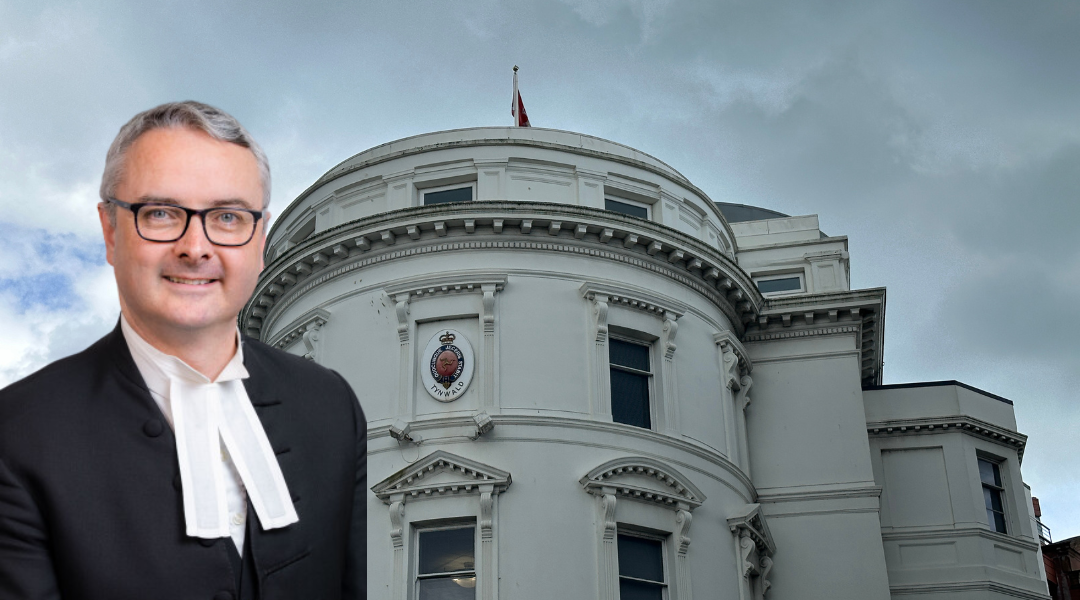
The Speaker of the House of Keys has launch a blistering attack on the Budget, accusing ministers of delivering a “middle class sop” funded by reserves in the run-up to the election.
Juan Watterson SHK, who voted against the Budget but didn’t speak in the debate, criticised the Council of Ministers for what he described as an “abject failure” of leadership.
“I’m angry about the Isle of Man Budget. Very angry,” Mr Watterson said.
“It appears that the Council of Ministers have given up wanting to deliver public services so has decided that people can have their money back.
Failed
He added: “In doing so, CoMin failed two pretty large groups on our Island – those who want to see Government services delivered, and those who are struggling to make ends meet.
“That £24m per year give away to pay for income tax personal allowance uplifts, paid for from reserves, could have gone a long way towards delivering either of those objectives.
“Instead, we have a middle class sop in the run up to the election, and it just so happens that turnout is highest in that group.”
Impact
The Speake highlighted the impact on low earners and small businesses.
“If you were earning less than £14,750 before, your income tax bill had nowhere to fall to,” he said.
“We learnt on Tuesday that a £750 rise in personal allowances was in the draft Allinson budget. That felt about right.
“Some of the rise in income tax receipts could have gone on increasing the secondary threshold for small businesses. This is the point where business pays NI contributions on employees’ wages.”
Mr Watterson also raised serious concerns about the island’s financial sustainability, warning that the structural deficit had increased and that the Budget had pushed the goal of balancing the books beyond 2031.
He added: “We have been reliant on our rainy day reserves since 2012. Had we not borrowed £400m, we’d now be down to our last £60m.
“Unlike Treasury, I don’t look at our National Insurance Fund as a reserve to be plundered.
“That has its own structural difficulties that need to be managed to pay for the pensions of today and the future, it’s not available to prop up day to day government spending.”
Despite his criticism, the Speaker acknowledged progress on the minimum wage following the work of the Select Committee on Poverty, which he chaired.