

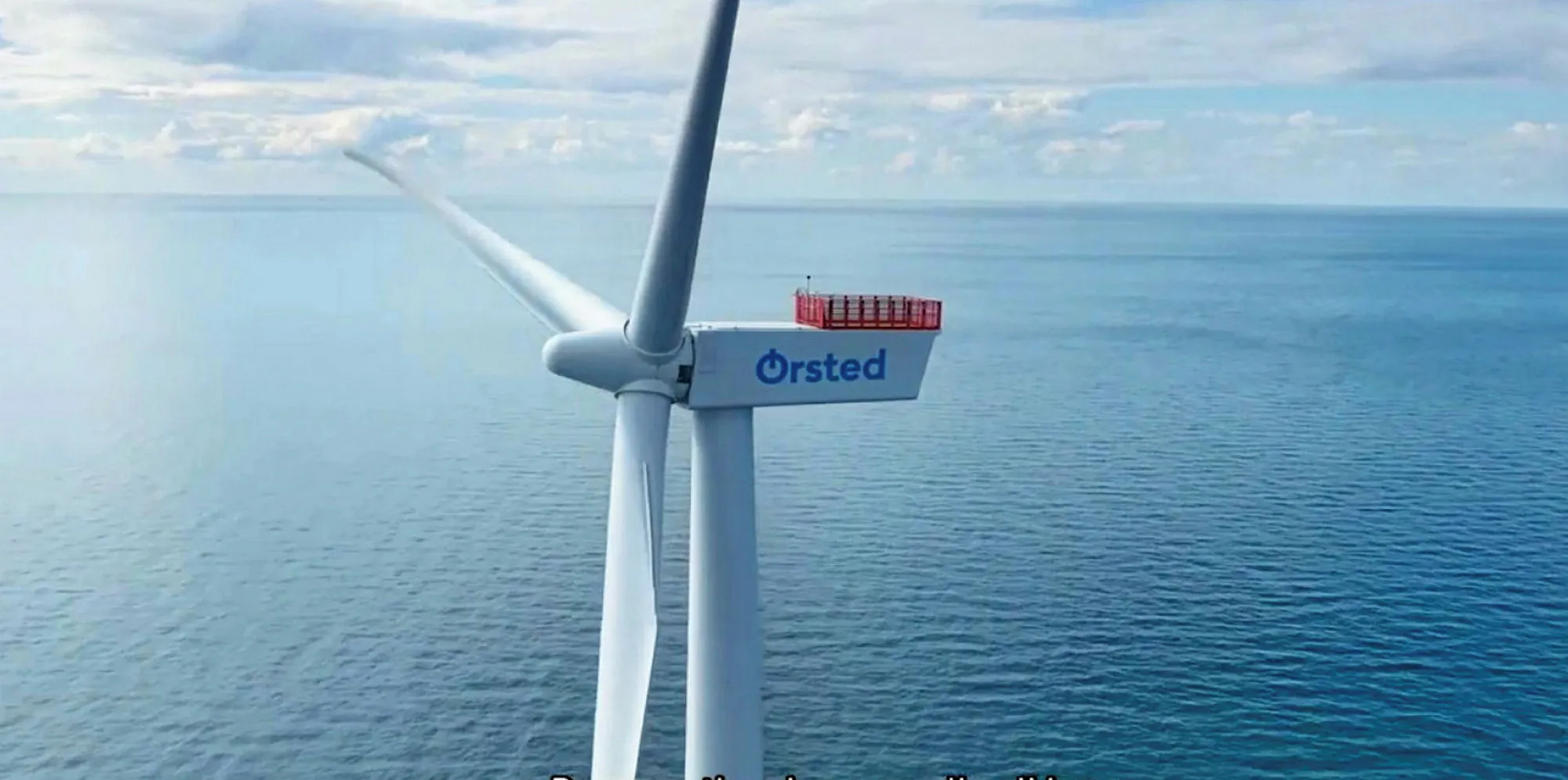
Rules for safety zones at sea to protect offshore wind farms will be laid before Tynwald later this month.
The Electricity (Offshore Generating Stations) (Safety Zones) (Application Procedures and Control of Access) Regulations 2026 are set to appear on the Tynwald Order Paper for the sitting that begins on October 20. The agenda is due to be published later this week.
An independent Examining Body has been considering the Mooir Vannin Offshore Wind Farm application by Ørsted. Public hearings were held and the body will report to the Council of Ministers with a recommendation.
Sitting MHKs were effectively warned not to comment on the proposals under the last administration, while many new candidates, who voiced their opposition to the scheme, were elected.
Safety Zones
The new rules are being put before Tynwald by the Department of Infrastructure.
An accompanying memo says the regulations apply “in relation to any application to the Department of Infrastructure seeking a declaration of a safety zone relating to an offshore renewable energy installation” under the Energy Act 2004, as applied to the island through the Climate Change (Energy Act 2004) (Application) Order 2026.
The regulations also set out categories of vessels and activities permitted in such safety zones.
Wind and Tidal Energy
Under the regulations, “applications can be made for the declaration of a safety zone to be located in an area of waters around or adjacent to a renewable energy installation”, as defined under the 2004 Energy Act “as an offshore installation used, or that has ceased to be used, for purposes connected with the production of energy from water or winds, and that permanently rests on, or is attached to, the seabed and is not connected to dry land”.
That means applications can be made in relation to “offshore wind turbines and tidal generating devices”.
The memo adds: “Safety zones may be declared in relation to installations located within territorial waters in or adjacent to island (between the mean high water mark and the seawards limits of the territorial sea).”
In addition, the regulations set out information required in any application for the declaration of a safety zone, including a description of “any renewable energy installation around which a safety zone is sought and in relation to the purpose and size of such a safety zone”.
And there is provision for the publication of notice of any public inquiry to be held.
The fee for any application for a safety zone is set at £2,000.
Permitted Vessels
Any safety zone exclusions would not include government inspection vessels, law enforcement vessels and vessels involved in life-saving.
“This regulation also permits certain activities in safety zones connected with the undertaking of development works and the undertaking of scientific monitoring requirements,” says the memo.
The order has appeared on the Tynwald Register of Business, ahead of the publication of the agenda for the October sitting of Tynwald. At present, it is categorised as a “negative resolution”, which means that it will pass automatically unless someone calls for a vote and it is then defeated.
You can view the full set of regulations here: Safety zones regulations
Appplicants Must Pay for Reports
Meanwhile, the Department of Infrastructure has a second item due to go on the agenda for this month’s sitting.
The Marine Infrastructure (Consenting Process) (Amendment) Regulations 2026 provides for applicants to be expected to pay towards the cost of any report compiled by an examining body.
An accompanying memo explains the new regulation “requires the applicant for consent to pay a report writing fee for the preparation of the examination report submitted to the Council of Ministers”.
It adds: “The fee is calculated by reference to the number of report writing days spent preparing the report and the composition of the examining body.”
Under the proposed rates, if there is a single examiner it will cost the applicant £2,258 per report writing day; £4,919 per report writing day if there is a panel of three examiners; and £7,490 per report writing day for a panel of four or five examiners.
Once again, this item is categorised as negative resolution, meaning it will go through automatically unless a Tynwald member seeks to call a vote calling for it to be rejected.
You can read this order here.