




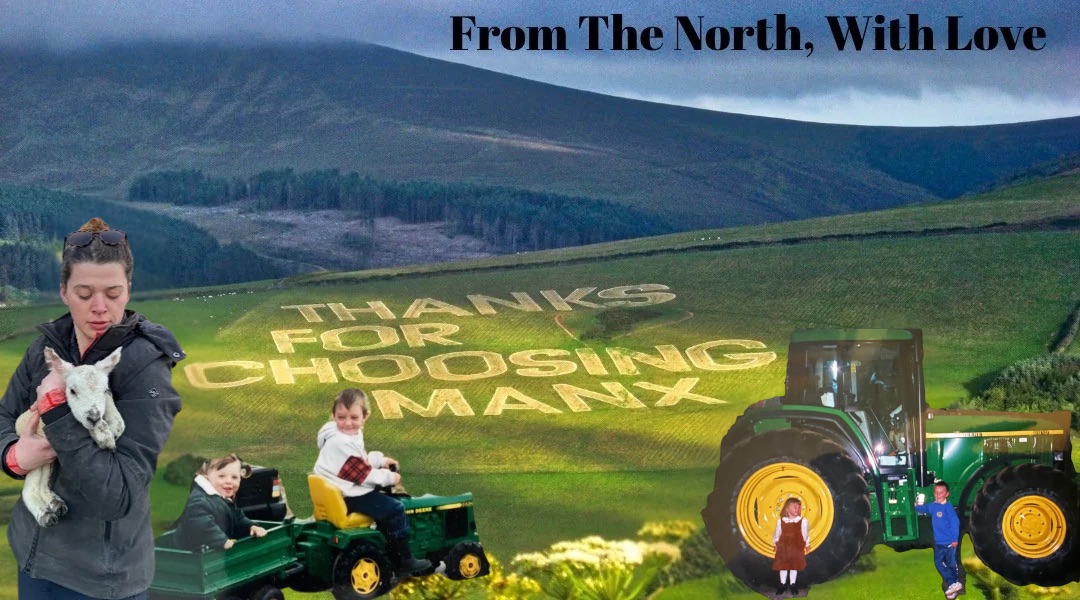
Today I realised that a certain ex-MHK has the complete inability to read a room, and maybe that is why they were unable to regain their seat.
When the Manx National Farmers’ Union took the extraordinary step of declaring a vote of no confidence in the senior leadership of the Department of Environment, Food and Agriculture, it was sending a clear message: something is badly wrong.
The letter was not the work of a pressure group complaining about a single policy decision. It was a comprehensive catalogue of concerns about food security, agricultural funding, livestock imports, market access, the island’s BSE status and the future sustainability of farming on the Isle of Man.
Yet former Rushen MHK Michelle Haywood’s comments on her personal blog, which she started after failing to be re-elected, opened with the line: “You do realise that DEFA isn’t just responsible for farming, don’t you?”
The problem with that response is that nobody suggested otherwise.
What Are You on About?
The MNFU’s letter does not argue that DEFA should focus exclusively on agriculture. It does not argue that the Chief Officer should be a farmer. It does not even claim farming should be prioritised above every other responsibility within the department.
Instead, it argues that DEFA’s senior leadership has failed to adequately deal with issues affecting one of the island’s most important industries.
Whether people agree with that conclusion or not, it deserves a more serious response than a rhetorical put-down.
The union’s concerns are extensive.
It claims DEFA’s handling of the BSE risk status divergence with Great Britain has resulted in “significant financial losses and restricted access to market”. It describes the response as “appallingly inadequate”.
It criticises the department’s approach to breeding livestock imports from Northern Ireland, claiming senior leadership demonstrated “a reluctance to act in a time-critical situation” and showed “a complete lack of understanding” of the challenges facing the industry.
It argues confidence between the industry and the department has “broken down”.
Most significantly, it concludes: “The continued decline of Manx agriculture, the loss of market opportunities and the failure to respond effectively to repeated warnings demonstrate that the current senior leadership is not capable of delivering what the industry urgently requires.”
What an Odd Thing to Say
What makes Haywood’s intervention particularly surprising is that it appears at odds with comments she herself made during the recent election campaign.
During Manx.News’ Rushen constituency debate, Haywood spoke at length about food security and the Isle of Man’s vulnerability to disruption in global supply chains.
She warned that climate change and international pressures could have serious implications for food availability. She acknowledged the island sits at the end of global supply chains. She stressed the importance of planning ahead.
Most notably, she said: “We absolutely need to support our farmers in producing food that the population needs.”
She also argued: “You need to see these problems and these issues coming and then responsible government needs to be looking about how we manage that.”
Yet that is precisely what the MNFU says has not happened and, given Haywood’s unsolicited response, it would not have happened had she been elected.
How Dare You
The line in the ‘From Rushen with love’ blog that really solidified my decision to give Haywood the time of day was this one:
“He [the chief executive] does understand if your current business model doesn’t work without large government subsidies.”
No wonder this former MHK didn’t get voted back in with such a lack of understanding of a farming business model.
Farmers rely on global market prices. They cannot simply set a price and run with it to make sure they are operating a viable business. They are also bound by weather and one thousand other factors.
It rains too much? You can’t get on the ground to work the crops. Doesn’t rain at all? Crops don’t grow, animals have no grass, and farmers must feed more cereals and silage. This may confuse a certain ex-MHK, but that costs money.
The whole point of subsidy is to enable food to be cheaper for the consumer while allowing the farmer to continue operating and producing food.
Let’s take the subsidy away. Okay, you’ll have two options: farmers go out of business or food prices accelerate.
However, if you lose farmers, back to supply and demand, food will become more expensive anyway because you’ll have an even scarcer product. And guess what? You’re even more dependent on global supplies.
If the subsidy was aimed at Isle of Man Meats, answer the question we’ve all been asking, Michelle: where does the subsidy go? Because it sure as hell is not going to the farmers.
I will shout it until my last breath on this Earth: look after your home markets and they look after you.
You Need Food
You can survive without pretty much everything except food. It isn’t a luxury, it’s a necessity. And no doubt Haywood will attempt to talk about environmental factors.
Farmers are the custodians of our land. They look after it and want it to be in the best possible condition because without that, you have no farming.
It’s very rare that I am truly gobsmacked by a comment made by a politician or former politician, but this is ignorance and lack of understanding at its finest.
It’s no wonder the Isle of Man voted for change.
The BSE situation on the island was nothing short of scandalous. Farmers were left with even fewer routes to market and not a single body in DEFA was held to account.
Farmers were losing thousands over a piece of paperwork that DEFA failed to submit.
The same farmers who are now becoming brave enough to vocalise the mental health issues impacting the sector, partially because of a lack of understanding and support from government.
And Michelle decides to undermine them in such a way?
They’re not silent voices. They’re the real voices of an industry that is on its knees and can no longer accept urban politicians dictating nonsense to a sector they do not understand.
Whether you like it or not, the buck stops with the Minister and the Chief Executive and, given that there is currently no Minister, it falls to the Chief Executive.
Why Do I Care?
I care because I grew up on a farm, and I am immensely proud to be a farmer’s daughter.
But I’m also the daughter of one of the first female coastguards on the island, the granddaughter of an ex-MHK and a former dairyman, and the granddaughter of a lighthouse keeper and a member of the Merchant Navy who turned his hand to preserving Manx heritage.
Heritage matters to me above all else: where we come from and what we leave for future generations when we are nothing but ash or dirt.
For generations, on each side of my family, they have been custodians of land and sea and people who understood the importance of food and the world around us.
That has inevitably been passed on to me.
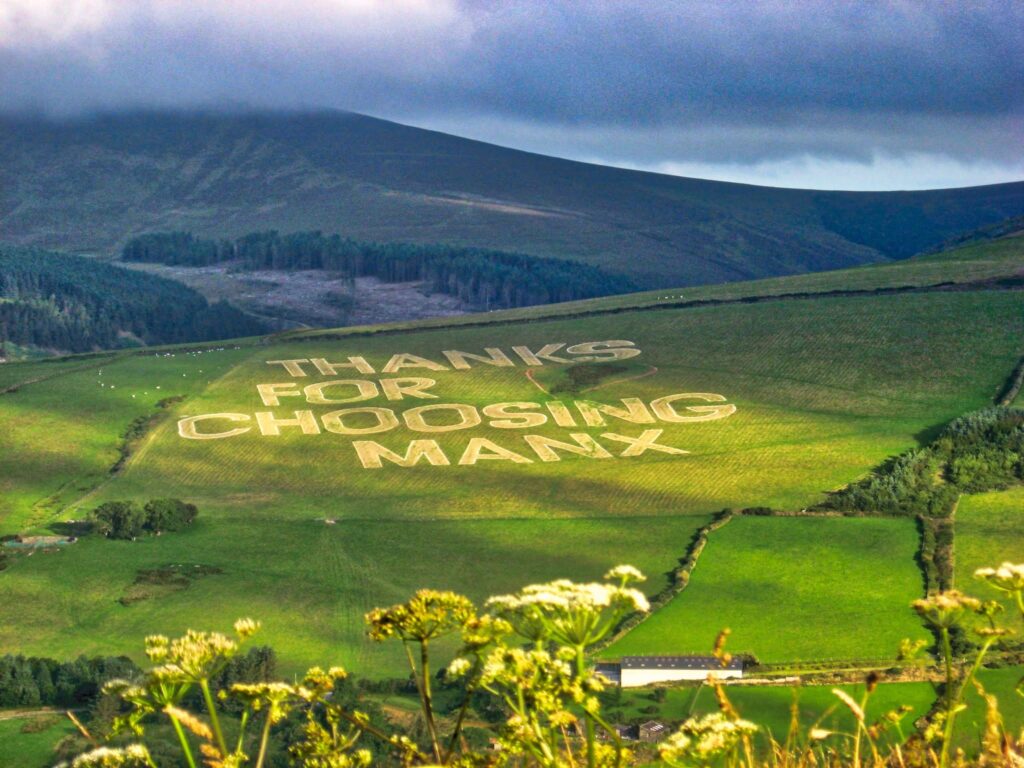
As a child, I spent my “holidays” going to agricultural trade shows and MNFU meetings. I even assisted in creating the “Thanks for Choosing Manx” artwork on the side of the Mountain Road.
You may now understand why I care so much about local food production. I’ve witnessed the blood, sweat, stress and tears first-hand. I’ve seen the accounts and I know the struggles.
Even when interviewing former Ministers, it became apparent to me that concerns from the sector were constantly falling on deaf ears.
Deaf ears that were supposed to guide the agricultural industry, and many other industries, into prosperity. Instead, they have failed.
Look Around You
The Isle of Man had 380 fewer farm holdings in 2023 than in 2002, with total livestock numbers falling by more than 60,000 and agricultural land use shrinking by over 15,000 acres during the same period.
Small farms have seen the steepest decline, with the number of holdings under 50 acres dropping from 356 to just 63.
We quite frankly cannot continue the way we are going.
If these trends continue, the future of Manx farming looks increasingly uncertain. More than half of the island’s farm holdings have disappeared since 2002, livestock numbers are down by over a quarter, and thousands of acres have fallen out of agricultural use.
At some point, decline stops being a trend and becomes a warning.
I, for one, do not want to be part of a generation that failed to argue, fight and stand up for our remaining farmers. Nor do I want to stand by while future generations lose the opportunity to enter the industry and enjoy access to Manx-produced food.
Because once that is gone, getting it back will be far harder than protecting it now.
