




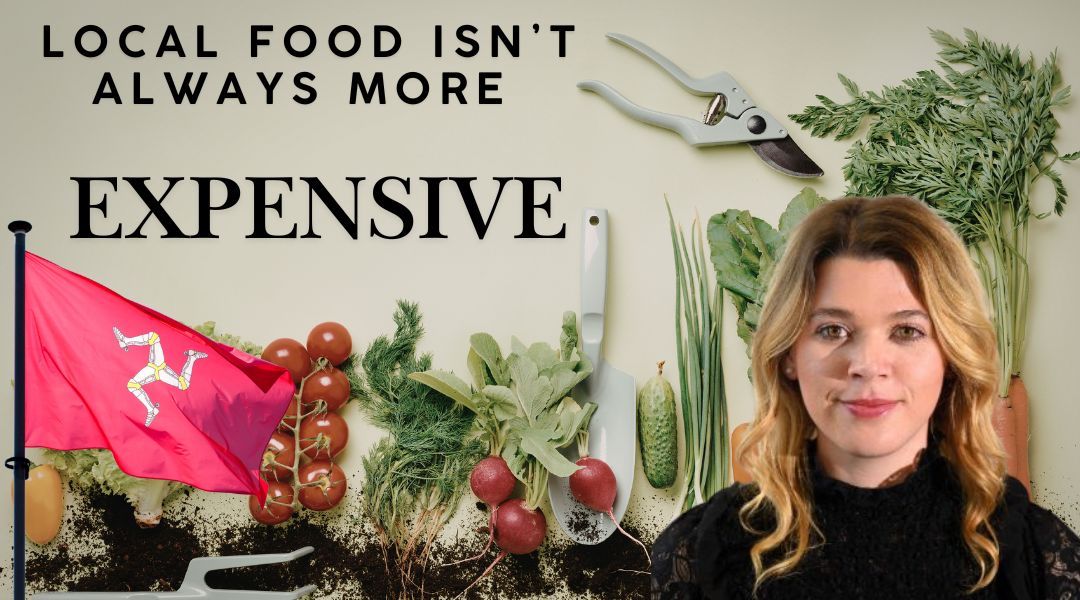
I’ve been banging on about food security and the importance of shopping local, but I often get the response that shopping local is too expensive.
On the back of those comments, I took myself out on a little research trip to the Isle of Man Farm Shop Company and to Ramsey Tesco.
It’s pointless me sitting in the studio ranting about food security if I’m up against claims that have some substance, but following my research not as much as many people think.
I debated doing a full weekly shop, but everyone buys differently. So instead, I opted for staple items: meats, bread, eggs, milk and a few veggie options. (Apologies to the vegans – I genuinely don’t know how you do it.)
Shoppers often assume Manx produce is pricier simply because it’s local, but a closer look at food prices on the shelves, and the cost of getting goods on and off the Isle of Man, tells a very different story.
The Prices
A comparison of everyday items this week shows that Manx milk (£1.50 per litre) is cheaper than Yeo Valley (£1.65), Manx beetroot (£1.80 per bag) undercuts Tesco’s (£2.10 per beet), and Manx potatoes (£2.25 for 2kg) sit close to Tesco’s Maris Piper (£1.55 per kg, or £2.48 for 2kg).
Even on higher‑value items, the gap is narrow: Manx half‑leg lamb (£18.74/kg) is only slightly above Tesco’s (£17/kg).
Manx cabbage, cheese and bread sit close to or below supermarket prices. And in some cases, Manx products are actually more expensive at Tesco than at a farm shop; Laxey Glen Mills flour is £1.40 at a local farm shop, but £1.45 at Tesco.
Some items are cheaper in Tesco, such as eggs, imported flour, imported leeks and basic sausages, but others, including butter, beetroot, certain cheeses and artisan bread, show supermarkets applying higher margins than Manx farm shops.
Manx cream (£1.60) is real dairy, while Tesco’s cheaper Elmlea is not. And while Tesco offers lower prices on some meats, Manx producers often exceed supermarket quality at similar or only slightly higher cost. Steak mince, for example, ranges from £13.11/kg locally to £6.30-£12.60/kg at Tesco.
The basket of Manx prices came to £86.28, compared with £82.33 for the Tesco equivalents, a difference of less than £4 across the full list.
That narrow gap reinforces that local food isn’t inherently more expensive; the real cost pressures come from freight and supply‑chain factors rather than Manx producers.
Freight is the Killer
While local produce can compete on price, the overall cost of food on the Island is heavily shaped by freight charges, not by farmers.
A major comparative study of global ferry routes found the Douglas to Heysham freight crossing to be the most expensive per mile of all 15 routes examined, with charges more than four times higher than comparable UK and Irish services.
The report concludes that these costs “inhibit the export of food products” and add significant expense to every stage of farming, from importing feed and fertiliser to exporting livestock and finished goods.
For Manx farmers, those freight costs are unavoidable overheads that mainland producers simply do not face. Moving a 17‑metre livestock lorry off the island can cost more than £4,000 before VAT, and ferry charges alone add around £10 per lamb, £12.50 per adult sheep and more than £100 per beef animal.
Those costs ripple through the supply chain, affecting both local produce and imported supermarket goods. The price difference shoppers see on shelves is often driven by transport, not by the farm gate.
The result is a food economy where “local” is not the luxury label many assume. In quality, yes, but not in price.
Manx producers often match or beat supermarket prices despite carrying far higher transport costs. And while some imported items remain cheaper, others, such as beetroot and potatoes are more expensive in UK supermarkets than in Manx farm shops.
The data suggests that supporting local producers does not necessarily mean paying more; instead, it highlights the structural cost pressures that shape the island’s entire food market.
A Final Note
Why have I spent an afternoon wandering around writing down food prices? Because I’m tired of hearing that Manx produce is too expensive.
It isn’t. If anything, it’s too cheap, and that’s a cold, hard truth many don’t like. I don’t like how expensive food is either, but I also understand the costs involved in producing it.
If farmers are constantly pushed to sell food at prices verging on below the cost of production, it simply isn’t viable.
If that continues, we will have a food shortage. Relying on imports is not food security. The UK can’t feed itself, and if global supply tightens, the countries we import from won’t prioritise feeding a small island in the middle of the Irish Sea.
And for those who say “we’ll just grow our own veg” – go for it. You’ll have a rude awakening when a tough season hits, or when you realise your food is seasonal.
All I want is for farmers’ concerns to be taken seriously, for the island to protect its suppliers and its food security, and for us to stop biting the hand that feeds us, before the day comes when the boat doesn’t sail and the shelves are empty.
