




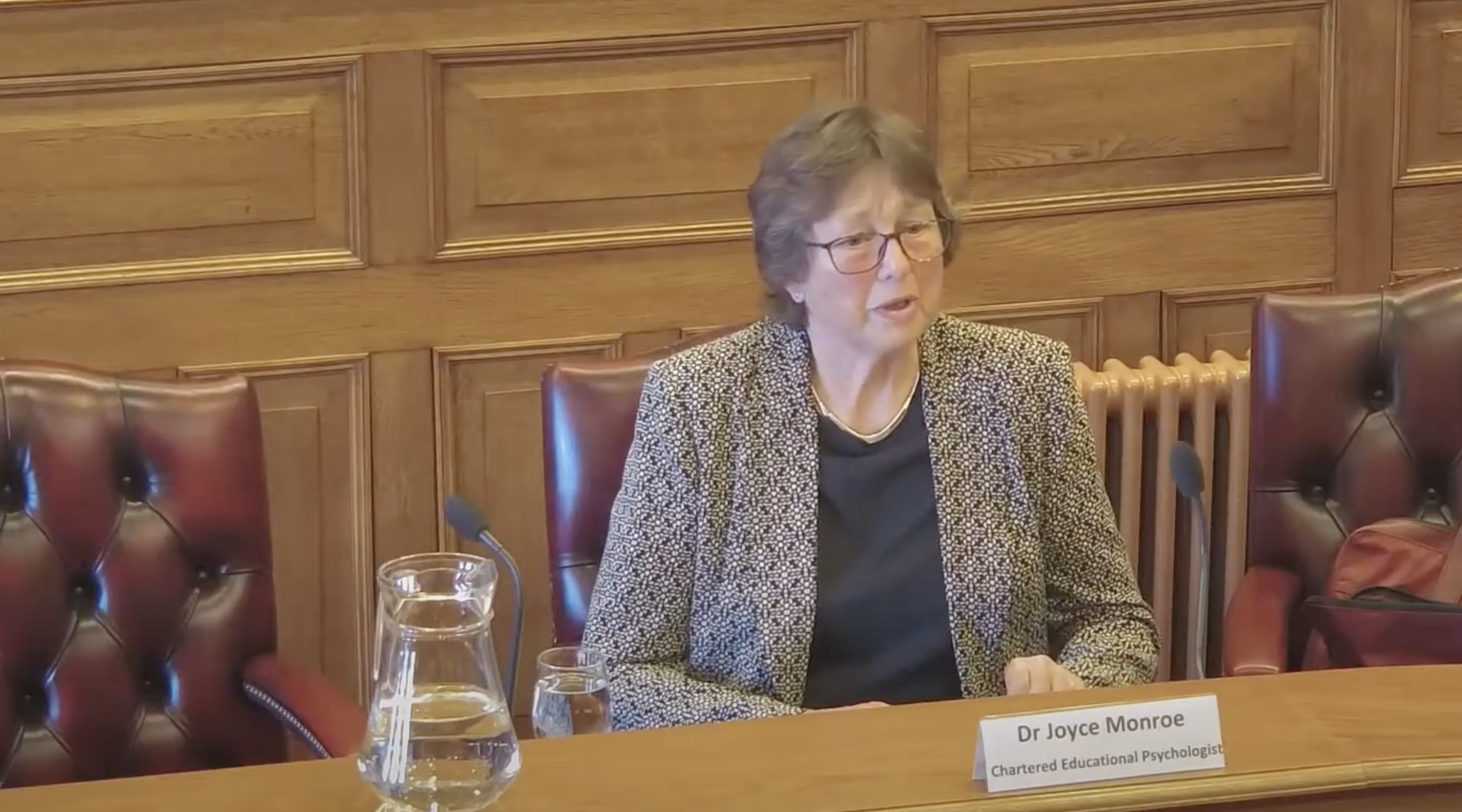
The author of the Isle of Man’s 2012 dyslexia policy has told of her disappointment at a lack of progress in supporting students with literacy difficulties.
Dr Joyce Monroe described the implementation of her policy as “heartbreaking” during evidence to a Tynwald select committee this week.
She revealed the comprehensive policy, which emphasised compensating for difficulties rather than “fixing” dyslexic learners, was met with “no follow-up, no budget, and no incentive.”
Dr told committee members: “I really thought I was going to change the lives of so many people, because as an ed psych, I could do so much, and I can see a certain number of children a year.
“But if that policy had gone in and worked, it would have meant all the teachers could do that. You know, it wasn’t going to be just one lone person or maybe two insights doing it or or what have you.
“It would have been a real sea change, but it wasn’t.”
Unhelpful
The session examined why the Department of Education shifted to using the term “literacy needs” instead of dyslexia.
Dr Monroe argued: “It’s unhelpful to think dyslexia is a special subgroup.” Adding: ” All children with reading or spelling difficulties have dyslexia.”
She suggested the terminology change stemmed from fears about financial liability dating back to 2005.
Committee members heard how training offers to schools were routinely declined, with institutions claiming their “training allocations were spoken for.”
Dr Monroe stressed the need for mandatory teacher training and better-resourced SENCO roles, highlighting that in England, special needs coordinators must complete specialist qualifications.
“Teachers are excellent at identifying problems early,” Dr. Monroe noted, “but there’s a big gulf in understanding how to support these students effectively.”
4 Comments