
The government has put a brake on calls for the Isle of Man to have a fully independent body to oversee its whistleblowing policy.
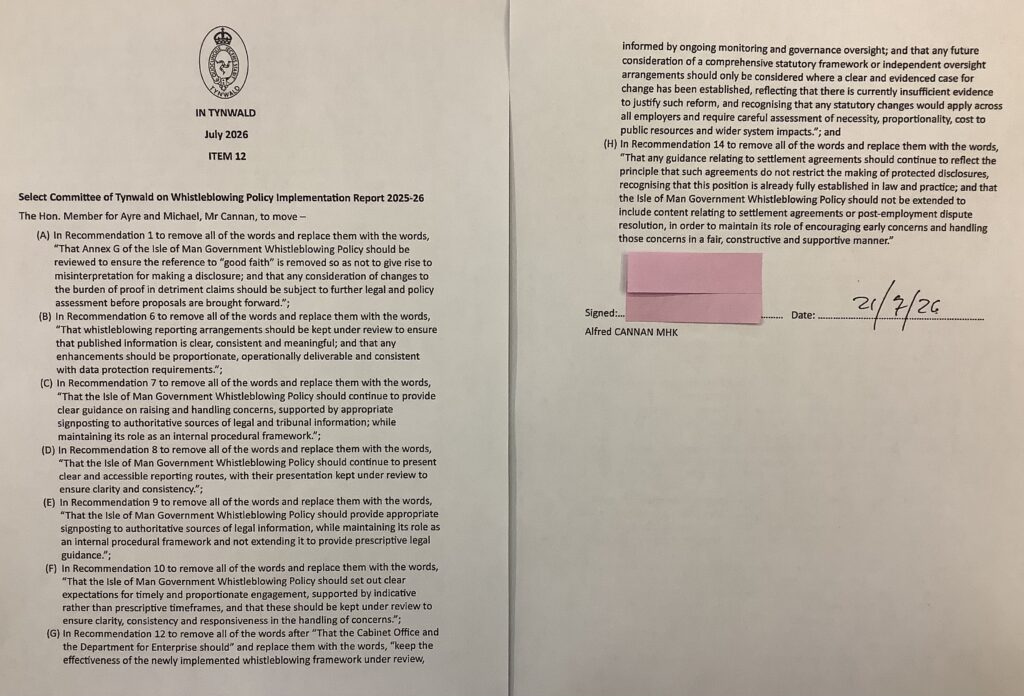
Chief Minister Alf Cannan stepped in to water down the proposal from a select committee.
The committee had recommended that the Cabinet Office and Department for Enterprise should bring forward a “full statutory whistleblowing framework” and to complete work on establishing the “feasibility of the Isle of Man becoming the first British jurisdiction to adopt a comprehensive statutory whistleblowing framework with an independent body for the receipt, oversight and monitoring of public interest disclosures”.
But Cannan tabled, successfully, an amendment to say that departments should keep under review “the effectiveness of the current arrangements” and that any future consideration of a fully independent framework should “only be considered where a clear and evidenced case for change has been established, reflecting that there is currently insufficient evidence to justify such reform”.
No Clear Evidence
He told Tynwald members: “A new statutory regime or independent body would represent a significant structural and resource commitment. The current framework has only recently been strengthened following legislative changes effective from April 2025 and the introduction of enhanced oversight and reporting arrangements.
“To proceed before there is a clear evidence base demonstrating the necessity and added value of such a reform would be premature and would not represent a proportionate use of public resources.”
He warned of “wider implications” beyond government as an employer, as it would affect the private sector.
It was one of a number of government amendments to recommendations in the report.
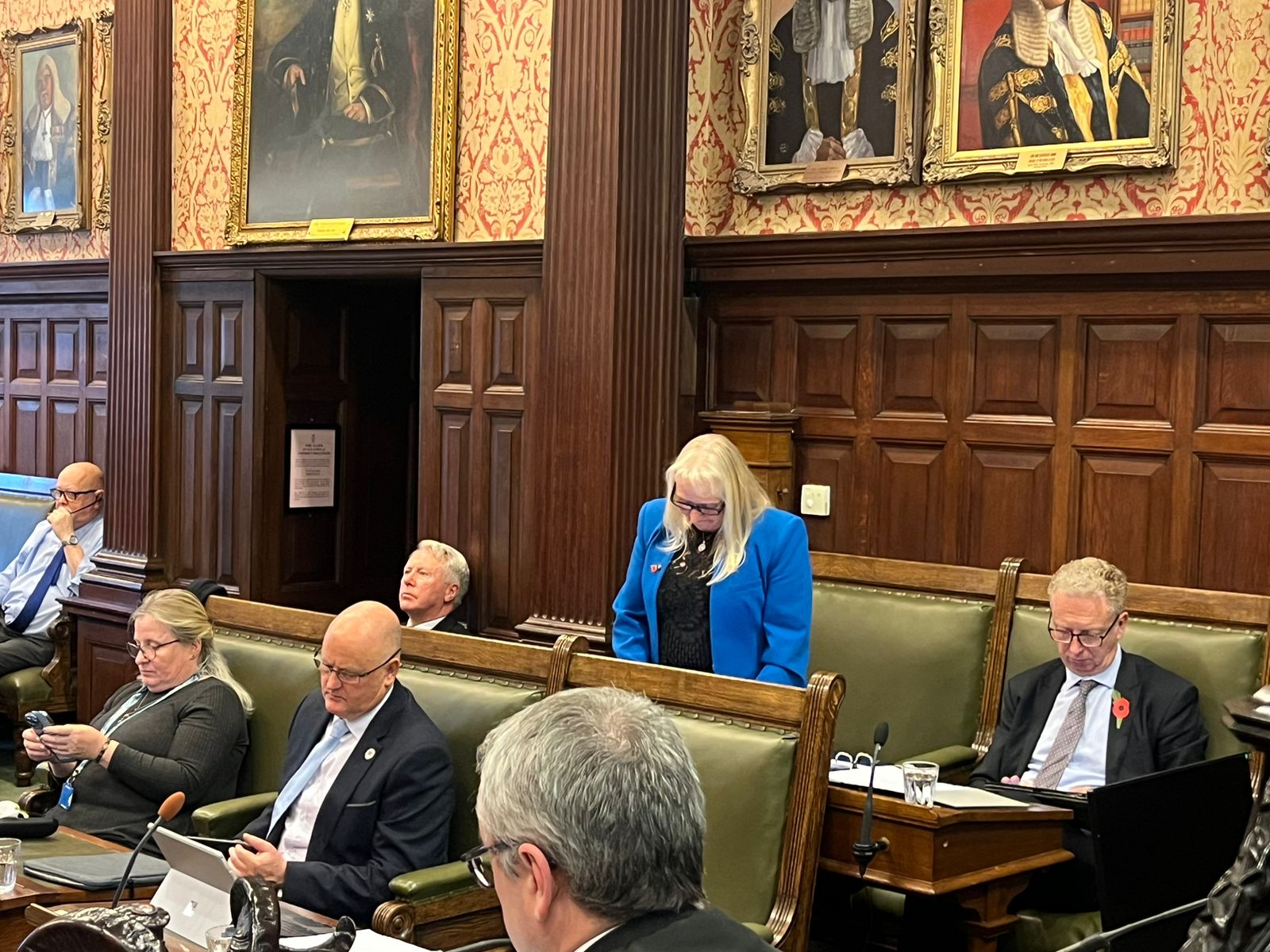
Onchan MHK Julie Edge, chair of the select committee, said she was prepared to accept the recommendations just to keep what was left in place.
Failing The Public
But she rejected the arguments against an independent framework and body and said changes to the rules last year had not had the hoped for positive impact.
“The new policy is actually failing individuals because it is internalising and giving government every opportunity to shut down that voice,” she said. “A framework would not be creating another layer; it would be reducing costs for government.”
She added: “If we in here do not want to support independent scrutiny of what a whistleblower says, I think we are all failing the public.”
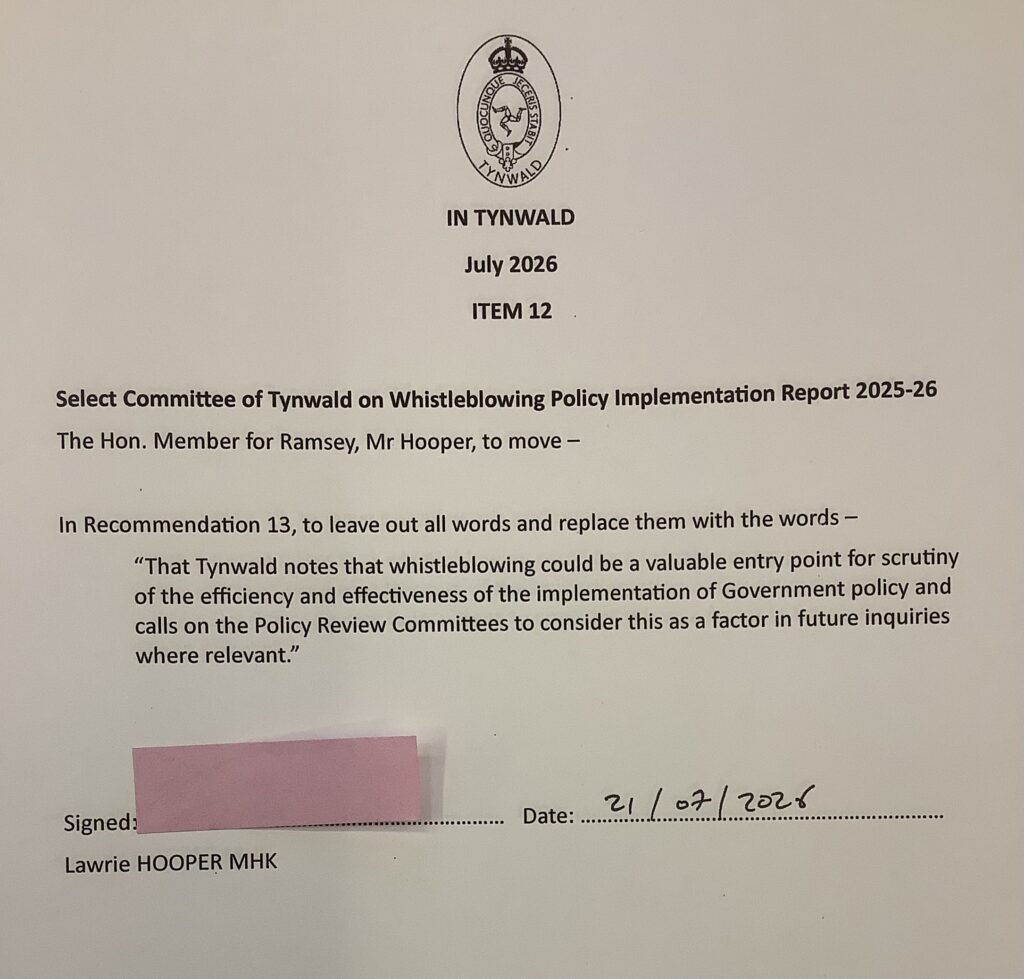
Edge was more comfortable with another amendment, also successful, that was tabled by Ramsey MHK Lawrie Hooper. This changed a recommendation that the Public Accounts Committee should take evidence annually on the effectiveness of the whistleblowing policy and to instead call on policy review committees to monitor it.
The select committee examined protections for employees who, as whistleblowers,highlighted issues of concern, and the way in which they were dealt with by their employers. It acknowledged that many of the cases highlighted in its investigation predated reforms in 2025 but insisted more needed to be done.
Tensions Rise
The debate saw tensions rise between Edge and committee member Gary Clueit MLC, who submitted a memorandum of dissent about the report and in Tynwald criticised the approach taken. And harsh words were also exchanged between Edge and her fellow Onchan MHK Rob Callister, who is chair of the Public Services Commission, requiring the intervention of President of Tynwald Juan Watterson.
Members voted in favour of all the recommendations, as amended, with the exception of recommendation 16, which stated that where the Employment and Equality Tribunal found that whistleblower had suffered “detriment” it should be referred to the Tynwald Commissioner for Administration. This was rejected.
Click the link to see the full select committee report, including the original recommendations before they were amended and Clueit’s memorandum of dissent. The successful amendments are all shown in the pictures.