




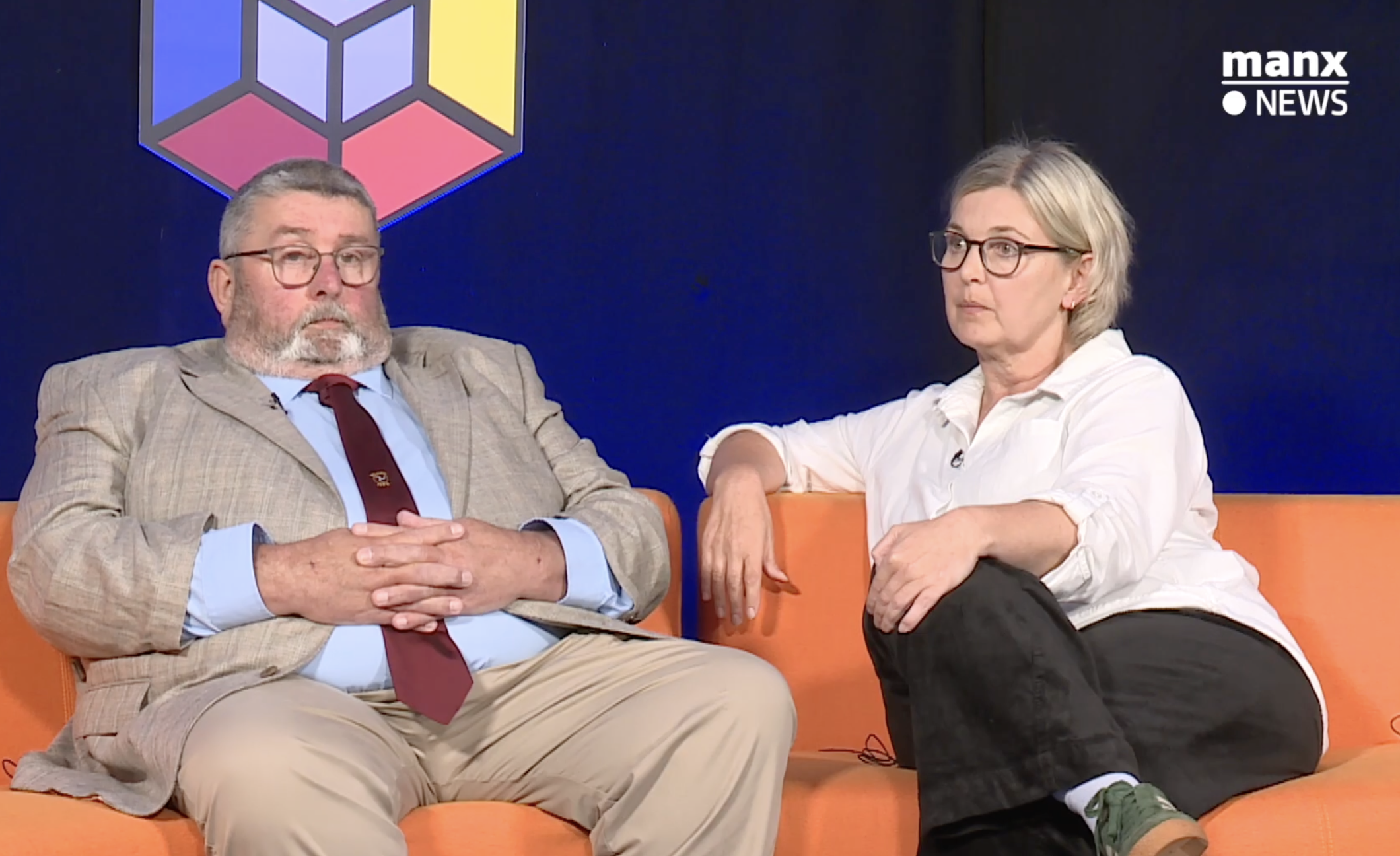
The Manx National Farmers’ Union’s vote of no confidence in the senior leadership of the Department of Environment, Food and Agriculture may have come as a shock to some, but for those paying attention to the sector during the General Election campaign, the warning signs were already there.
The union’s letter claims DEFA’s senior leadership failed to address major challenges facing agriculture, citing concerns over food security, agricultural funding, market access, the island’s BSE status, livestock imports and ongoing issues at Isle of Man Meats.
Yet many of those same frustrations had already been voiced publicly by MNFU President Murray Cringle and Secretary Sarah Comish during Manx.News‘ election programme.
One of the union’s biggest concerns was food security.
Slow Burner
Speaking on the election progamme, Cringle described food security as a “slow burner”, but warned it had “never been more of a reality” than it is today.
He argued that the Isle of Man could not rely indefinitely on international supply chains and said government needed to recognise the strategic importance of producing food locally.
Market access was another issue repeatedly raised. During the programme, Comish said government had failed to keep pace with changing post-Brexit trading arrangements and claimed the industry was now suffering the consequences.
“I think the last five years, I’m going to say it, they have not been paying attention to that at all,” she said.
She continued: “They were warned, and now as a result, we’ve got this situation where Manx cattle cannot trade in the UK as they once did, and they’re losing value because of it.”
Government Procurement
The discussion also revealed growing frustration over what the union viewed as a lack of practical support for local producers.
Discussing government procurement, Cringle questioned why departments were not automatically sourcing Manx produce where possible.
“Why does not government go Manx first?” he asked. “If they’re going to talk about backing us, let’s back us. We’ll do the job. But you’ve got to back us to do it.”
Meanwhile, Comish argued there had been a steady decline in agricultural production.
“There’s been quite a decline in production over the last few years, the last five years definitely,” she said, adding that rebuilding production becomes increasingly difficult when markets are lost and additional barriers are placed in front of farmers.
Long Term Future
Both representatives repeatedly highlighted worries about the long-term future of farming and the next generation entering the industry.
“There has been no real thought put into the next generation,” Comish said.
“They are there. They want to get into the industry. They want to do something, but there’s just too many hurdles in the way.”
Perhaps one of the most striking moments came when the conversation turned to the relationship between politicians and the farming sector.
Asked whether there was enough appreciation for farmers as custodians of the countryside, Comish replied: “I think the general public, yes. I think government and some politicians, no.”
She added: “I think maybe just because it’s been there for them all this time, they’ve taken it a little bit for granted.”
That sense of frustration would later culminate in the union’s vote of no confidence, in which it claimed confidence between the industry and DEFA’s senior leadership had “broken down”.
What’s Next?
Much has changed since the programme was recorded, with Clare Barber losing her seat at the General Election and Chris Thomas later appointing Dr Rachel Glover as the island’s new DEFA Minister.
Whether the appointment of Dr Rachel Glover marks the reset the farming community has been seeking remains to be seen.
What appears beyond dispute, however, is that the concerns which eventually led to the confidence vote had been voiced well before the letter landed on the Chief Minister’s desk.
The question now is whether the new administration is prepared to act on them.
