



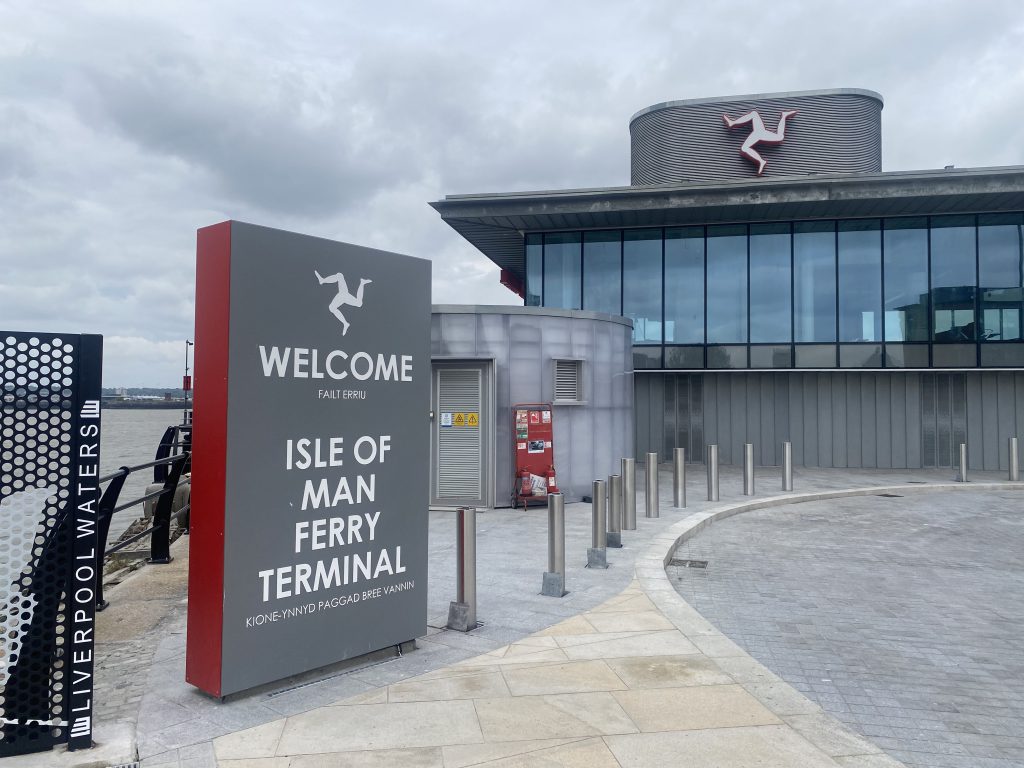
In a development that surprised absolutely nobody who has followed the saga, MHKs were told today that the bill for the ferry terminal at Liverpool has seemingly sailed past the £100 million mark.
The project, which began as a prudent £38 million plan to secure a “lifeline” link, has evolved into a decade of planning, politics and astonishing disregard for public finance.
Our story begins in July 2016, with a stark warning from former DoI Minister Phil Gawne that by 2019 the former Steam Packet base new the Liver Building would be gone.
Buy It!
The strategy was clear and seemed somewhat almost plausibly sensible.
The government would step in where a commercial stalemate between the Steam Packet and Peel Ports had stalled progress.
As an aside that only happened because the Steam Packet only had 10 years or so on its user agreement and had not yet been bough by taxpayers, so Peel wasn’t keen on a massive investment without guarantees.
The plan had two intertwined pillars:
- Buy the Land: Purchase a site at Princes Half-Tide Dock for a sum “not exceeding £3.5 million” to secure long-term control.
- Lock in the User: Negotiate a new 15-year “Strategic Sea Services Agreement” with the Steam Packet, ensuring a vessel would actually use the new terminal they’d build.
Money
The initial budget for the terminal itself was a breezy £38 million.
That 2016 report was confident, outlining a “universal berth” for 1,000 passengers. Politicians, presented with a logical plan to avert a crisis, approved it. A solution was in sight!
Fast forward a few years and the budget had begun to exhibit the same fortunes as Liverpool’s title defence.
Before the 2021 election, Garff MHK Daphne Caine tried to get the DoI to admit it would be more than £50m, but the then minister Tim Baker wasn’t keen on giving a figure.
After the election, we found out that £38m had become £70m.
The Luftwaffe
The reasons were many and varied from global inflation to complex engineering and the small matter of a pandemic.
But the most dramatic delay came from a rather unexpected quarter, the Luftwaffe. Yes, the ghosts of the Second World War decided to have a final say.
During preparatory work, surveyors discovered not one, but multiple unexploded bombs on the riverbed, likely dropped during the Liverpool Blitz.
The Home Front
Meanwhile, back in the Manx parliament, Tynwald members watched the rising figures with a mixture of horror and grim fascination.
They approved more money, often with stern words about ‘rigorous oversight'” ‘, while the terminal’s price tag seemed to have a will of its own.
All along the way, minister after minister has never wanted to admit a figure, until they needed a vote to expand the budget or it was dragged out of them.
Keys
That leads us to today where the David Tennant of Manx politics Tim Crookall, back at the DoI for another spell, said he had been advised the DoI could not reveal a figure.
In steps Lawrie Hooper.
Following a warning that he would do it, Mr Hooper used his knowledge of the figures from his time in the DoI to say it had already cost “somewhat north of £100m”.
He added: “All the money has already been paid out. So the reality is now we are working back from a theoretical maximum cost backwards towards what the actual final settlement will be.”
Mr Crookall would not confirm that figure but said negotiations would carry on for up to another 18 months with Tynwald having to provide a supplementary vote to top up its budget.
So, as taxpayers digest this latest figure, you can reflect on a project that became more than just a ferry terminal.
It’s a testament to persistence, a masterclass in maritime project inflation, and arguably the world’s most expensive bomb-disposal operation.