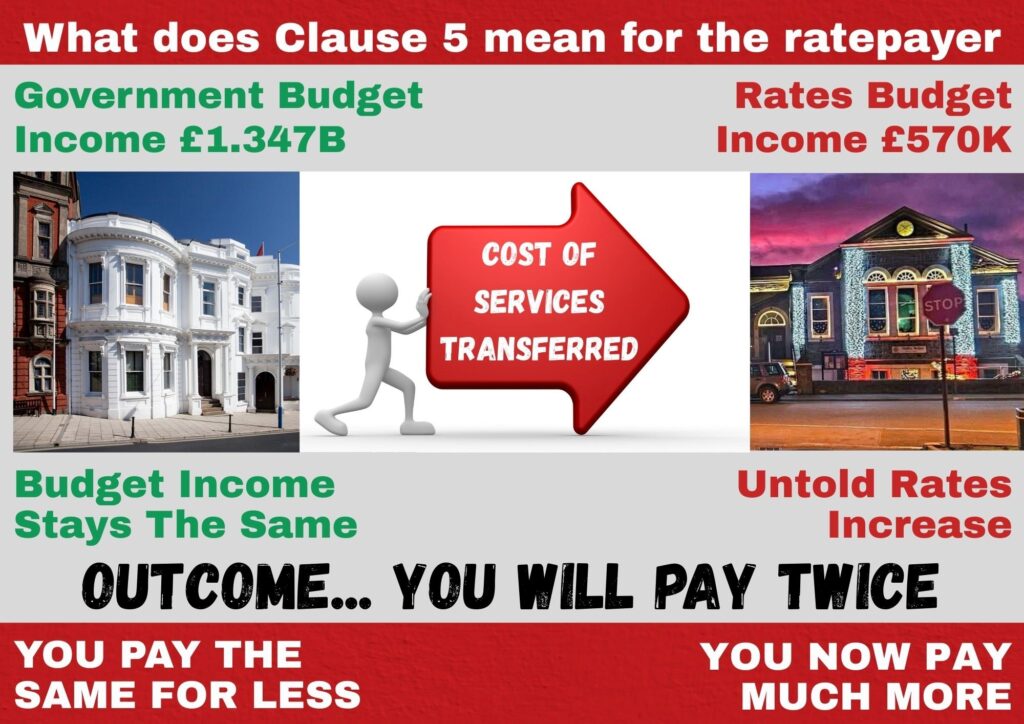


The battle over the Local Government (Amendment) Bill 2023 is set to reach a critical stage today, as local authorities present a detailed briefing paper to Members of the House of Keys. At the centre of the row is Clause 5 — a sweeping provision that Local Authorities say threatens democracy and household finances.
The briefing (Available for download below), circulated ahead of the debate, warns that Clause 5 would allow the Department to impose new duties on local authorities, amend existing laws by regulation, and compel Authorities to contribute financially to services delivered elsewhere.
Scrutiny Under Fire
Local authorities argue those safeguards are missing. The paper highlights how Legislative Council scrutiny was compressed, evidence sessions were procedurally imbalanced, and key constitutional concerns were brushed aside in favour of ministerial assurances.
In one unusual move, the Bill’s sponsor DOI Minister (Dr Michelle Haywood MHK), along with DOI Member Lawrie Hooper MHK, were permitted to intervene directly during oral evidence, along with four of her Departmental officials. Hooper was the original creator of ‘Clause 5’ when he introduced the power as a ‘private members amendment’. However local authority chairs were denied the support of their professional officers at the hearing. The briefing calls this “executive involvement in scrutiny” and warns it undermined confidence in the independence of the process.
Financial Risks for Households
Financial risks are front and centre. Clause 5 enables cost‑shifting from central taxation to local rates, a mechanism that is not income‑assessed and therefore hits hardest those on fixed or low incomes. For households already struggling with rising costs, the prospect of unfunded mandates landing on rates is seen as intolerable. The paper links the clause to Treasury’s recent consultation on rating reform, which proposes weakening central funding guarantees and reframing rates as a tool for national policy delivery. Together, these moves suggest a wider government direction of travel: retaining policy control while transferring financial responsibility to households.
Democratic and Human Rights Concerns
Democratic concerns are equally stark. The briefing notes that “consultation is not consent,” and warns that Clause 5 erodes local autonomy by enabling compulsion through regulation rather than partnership through primary law. Human rights issues are also raised, including democratic participation under Protocol 1, Article 3 of the European Convention, property rights via rates, and procedural fairness under Article 6. None of these were substantively addressed during Legislative Council debate.
A Structural Power Shift
The paper concludes that Clause 5 is not a technical tidying‑up measure but a major structural shift in the balance of power between central and local government. If enacted unamended, it risks higher household rates, erosion of local democracy, increased legal exposure for councils and commissioners, and weakened public confidence in legislative scrutiny.
United Appeal from Local Authorities
Local authorities are united in their appeal: remove Clause 5 entirely. If Members are not minded to do so, they demand minimum safeguards — guaranteed funding for any imposed duties, removal of the Henry VIII power, consent rather than consultation, and independent oversight mechanisms.
As the House of Keys prepares to debate the Bill tomorrow, the stakes could not be higher. Tomorrow’s debate will decide whether Clause 5 is struck down or whether reform is forced through the back door — with ratepayers left to pick up the bill.