




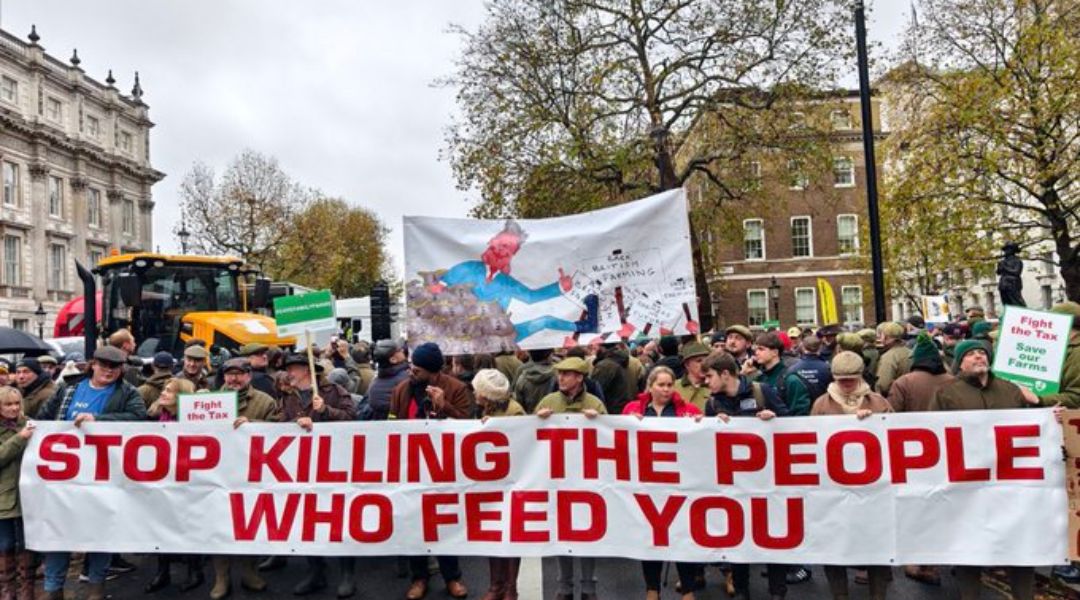
Farmers across the United Kingdom gathered in London today to object the changes on inheritance tax on farms.
Now, the Isle of Man is in a better position than those across the water, but that doesn’t mean we can simply ignore it.
I for one can’t, so for what its worth I’m doing an opinion piece on it.
Agricultural Property Relief
Since the early 90’s, agricultural property relief (APR) has meant family farms have been passed down tax-free in a policy intended to bolster food security and keep people on the land.
The tax exemption was made due to farming often not being a very lucrative business.
However, from April 6 2026, the full 100% relief from inheritance tax will be restricted to the first £1m of agricultural assets.
Above this amount, landowners will pay inheritance tax at a rate of 20%, and this tax can be paid in instalments over 10 years interest free.
Farmers Vs Inheritance Tax
The UK treasury has “calculated” this will only affect less than 500 farmers, however the National Farmers Union argues that the changes will hit 76% of UK farm assets.
For those of you reading this that are thinking why should farmers be exempt and if they have a £1m they must be doing very well, if only!
The average farm land price in the UK is £10k an acre. Let’s say on average a British farmer will be farming 300 acres. That makes their land alone worth £3m.
That’s before any equipment, farm buildings and house are taken into account. For context a decent combine harvester will set you back a minimum of £100k plus modern tractors rarely coming in below £50k.
Now there are additional tax-free allowances everyone is exempt from paying inheritance tax on estates up to £325,000 and an additional £175,000 is exempt if the main property is given to a direct family member.
This would then give a further £500,000 relief, which in theory means that £1.5m would be tax free if given to a child or grandchild.
With the changes the Labour government have brought it, that means the tax bill for the farm would be £300,000.
Just Pay it?
“Just pay it. The rest do”. If only it were that simple.
Let’s make a scenario. You have inherited a 300 acre farm which is worth approximately £3m.
Everything gets planted into wheat. With the weather this year it’s been a below average year and you have a yield of 2.5 tonnes per acre and the price of wheat is £187p/t.
The total income would be £140,250 – a lot of money, a brilliant income! But, as we know with most things, theres a cost element to producing that product.
Costs
- Fuel;
- Hiring of machinery;
- Loans;
- Fertiliser;
- Spray;
- Maintenance of equipment;
- Money set aside for new machinery;
- Grain drying;
- Electricity;
- Property maintenance;
- Insurance;
- Income tax.
After all of the costs, the farmer will more likely than not have a profit of around £30,000.
That again is fine, that is the farmers to do what they like with. However, they now have £30,000 a year to pay in order to pay off the £300,000 inheritance tax over ten years.
This is where the problem lies. How is it sustainable to farm, but also live when your remaining profit goes to the government in tax? Simple it isn’t.
Now, if these farmers opt to sell their land we have a bigger problem on our hands. Food security. If the land is sold, the harsh reality is that the average working farmer simply won’t be able to afford to buy it.
Studies have shown that 50% of the land in the UK last year was bought by non farmers, which isn’t a great concept when you think we have a growing population but fewer food producers.
Farmers To The Streets
What is worth remembering is that many of these farms have been passed through so many generations, they themselves haven’t had the money to just go and buy the farm outright.
We all know farming isn’t that accessible to get into, it’s too expensive to get into without being born into it.
The simple message is; if these farmers cannot afford to pass their farms onto the younger generations, you will not have locally produced food, and you will not have local food security.

4 Comments