

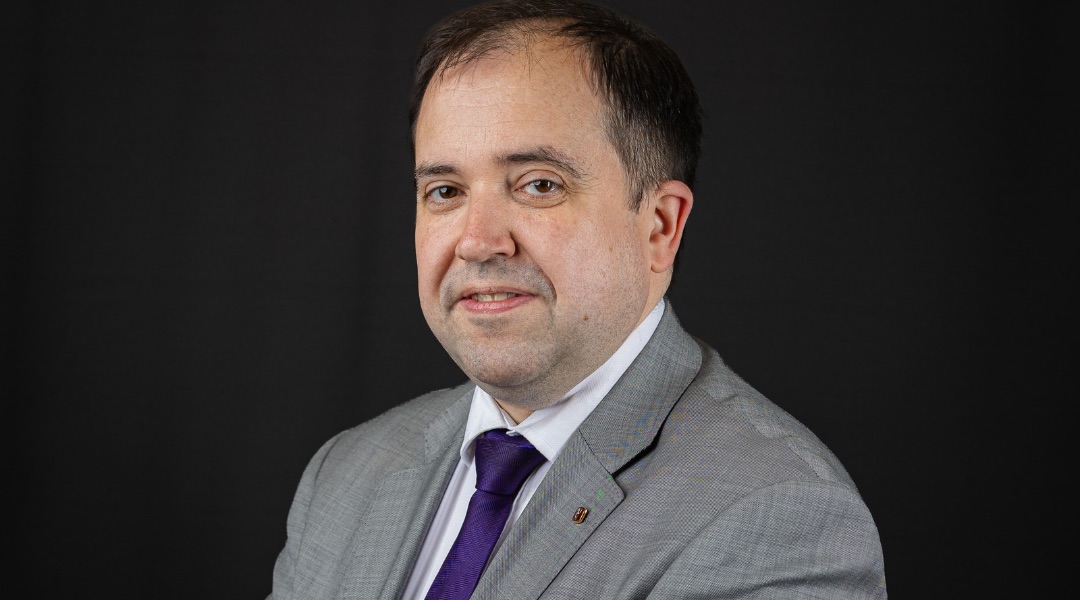
A former cabinet minister has fired a warning shot over the effectiveness of the new government’s plan to produce an annual policy document to be debated.
Earlier this week, Tynwald gave unanimous backing to Chief Minister Chris Thomas’ motion that will see the Council of Ministers produce a first set of policies by the end of November and put it before Tynwald for debate. That will be followed by an annual policy paper and debate every October.
But Douglas North MHK David Ashford, who is also Speaker of the House of Keys, warned that it would be how the policies affect people’s lives that matter, not whether arbitrary targets are set and met.
He told his Tynwald colleagues: “How do we ensure a newly elected administration sets out a coherent direction, establishes priorities which are deliverable and is then held properly accountable for achieving them?
“It is an important question. But it is also a question which this Court has been asking in various forms for a very long time.
“I think we need to be careful in attempting to answer it once again, we do not simply repeat what we have done before and give it a slightly different title and then congratulate ourselves and having invented something new.”
We Have a Plan
Ashford, who was Cabinet Office Minister at the end of the Cannan administration, and has previously served as minister at both Health and the Treasury, said: “If there is one thing successive Manx governments have never lacked, it is a plan!
“We have had policy documents, strategic plans, agendas for change, programmes for government, Island Plans, action plans, delivery plans and implementation plans.
“Indeed sometimes it has seemed that when a plan encounters difficulties, the immediate response is to produce another plan explaining how the original plan will now be delivered!”
Any government programme or plan should be “more than a collection of commitments assembled because a deadline has been imposed”.
It should represent the “considered and collective judgement” of Council of Ministers.
Need for Public Input
He pointed out that previous reviews of the roles of parliament and government had called for proper public engagement in the production of any policy programmes.
He said: “The principle of public involvement is not some novel addition which I am suggesting today.
“It was part of the approach recommended by Lord Lisvane a decade ago and endorsed for further work by this Court.
“Yet it is conspicuously absent from the wording of the motion now before us.”
Ashford added: “Successive government programmes have increasingly adopted names which emphasise collective ownership. We had Our Island: A Special Place to Live and Work. More recently: Our Island Plan.
“But putting the word ‘our’ on the front cover does not by itself establish who has actually had a hand in writing what appears inside.
“If we want the public to feel ownership of the government’s direction, we have to give them an opportunity to influence it.”
Measure the Right Things
He said the evolution of policy programmes and targets had not always been helpful and governments had become “better at measuring the completion of actions than measuring whether those actions were making a meaningful difference”.
Ashford added: “We have to be prepared to recognise where progress was made, where it fell short and where expectations exceeded what could realistically be delivered.
“That is not a weakness. It is what proper accountability looks like.”
The MHK warned: “It is perfectly possible for Government to meet all of its internally determined targets and still fail to improve the circumstances of the people it serves.”
Scrutiny Warning
Ashford also expressed concern at the wording of Thomas’ motion and future plans requiring Tynwald’s endorsement,
Government’s responsibility was to govern, but Tynwald was there to scrutinise and challenge.
“We must be very careful not to create a system in which government can present a programme to this Court, secure approval for it and then subsequently point to that approval as evidence that Tynwald shares responsibility for every decision taken in pursuit of it,” he said.
“The Council of Ministers must remain responsible for its own policy choices and the individual Members of this Honourable Court must remain free to exercise their judgement as those policies are translated into actual expenditure, legislation and administrative decisions.”